Wednesday, July 15, 2009

I Tried Zucchini and I Liked It

Ever since a rather unfortunate incident in my childhood, I had vowed never again to eat zucchini. At the behest of my parents, I had taken a small nibble of the bitter, soggy vegetable in order to have a plate of Oreos for dessert. As much as I once loved Oreos, I remain unconvinced that my minuscule tasting of zucchini was possibly worth it.

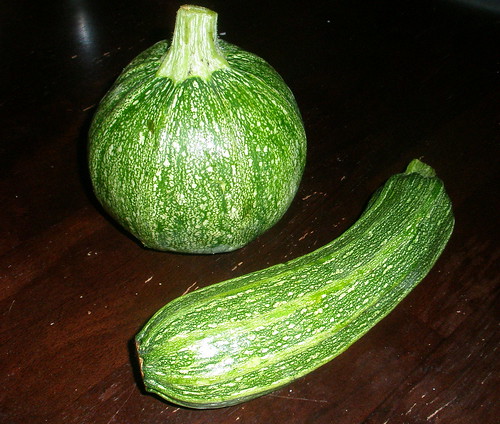
Well owe it up to a bout of locavore lunacy, but guess what ended up in my Greenmarket tote last weekend? Yes, two heirloom varieties of the forsaken fruit (complementary membership to the Culinary Studio Fan Club for anyone who can remind me what varieties these are):

After cursing myself for purchasing a food I had vowed never to eat again I decided that I better suck it up and eat my zucchini. After all, it had been about 17 years since I had last tried it; I may have not matured by much in that time, but I'd like to think that my palate has. It was time to give zucchini another chance.

Owing zucchini a fair opportunity to make me take back all the bad names I had called it and the ugly glances I had given it on restaurant menus, I took care to peruse my cookbooks to come up with a recipe that made the vegetable sound palatable. Karen Page and Andrew Dornenburg's The Flavor Bible stated that black olives, pecorino cheese, mint, and lemon juice pair well with zucchini, and since I had all of the ingredients on hand, I decided to make a raw zucchini salad with them. I also owe thanks to Nate Appleman's A16: Food + Wine for additional inspiration on both the technique and the recipe.

So, did the recipe give me a new found love for zucchini? While I doubt I will be craving zucchini in the near future, I no longer count myself among the zucchini haters. Hell, I ate two platefuls. Zucchini and I have come a very long way indeed.


Zucchini Salad with Mint, Pecorino, and Lemon
Serves 4

Ingredients:
  • 2 large zucchini
  • 1 tsp. kosher salt
  • 1 handful mint, minced
  • 1/4 cup kalamata olives, pitted and sliced
  • 1/4 cup grated pecorino cheese
  • Juice from half a lemon
  • 3 tbsp. olive oil
Directions:
  1. Cut ends of zucchini and discard. Thinly slice zucchini lengthwise.
  2. Place zucchini in a colander and toss with kosher salt. Let colander sit in the sink until zucchini begins to wilt and soften, about ten minutes. Rinse zucchini well and pat dry. Set aside in a large bowl.
  3. Add the remaining ingredients to the bowl and toss well. Serve immediately.


Monday, July 13, 2009

Spaghetti with Fava Beans and Pancetta

Pasta with fava beans is a traditional spring-time dish in Southern Italy. Locally grown fava beans may not be available in New York until summer, but it's still perfect dish for warm weather no matter the time of year. The fava beans add a refreshing sweetness, while the pancetta makes this light dish just hearty enough. I adapted the recipe from A16: Food + Wine; follow along to my photographed directions:

First, set your mise en place (red onion, pancetta, red pepper flakes, blanched and peeled fava beans, spaghetti, pecorino, black pepper, olive oil):


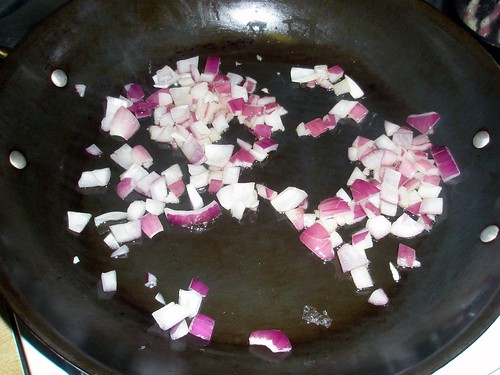
Next, saute the red onion in olive oil over medium heat:


Add the pancetta to the pan and was cook until it begins to get crispy:

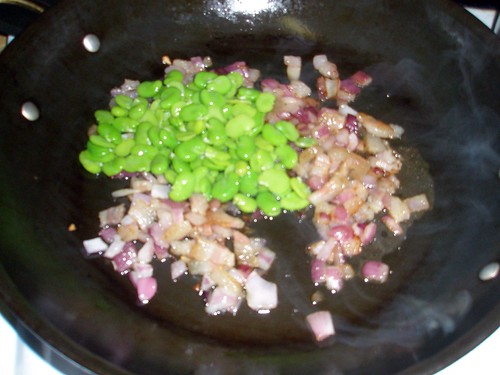
Lower the heat to low, toss in the fava beans, pepper, and a ladle of pasta cooking water:


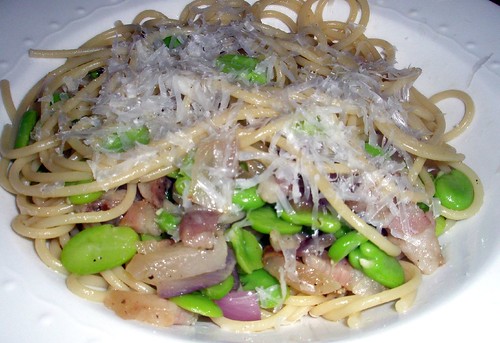
Toss the everything together with the pasta, add some olive oil, and top with grated pecorino cheese and serve:

Sunday, July 12, 2009

Paella!

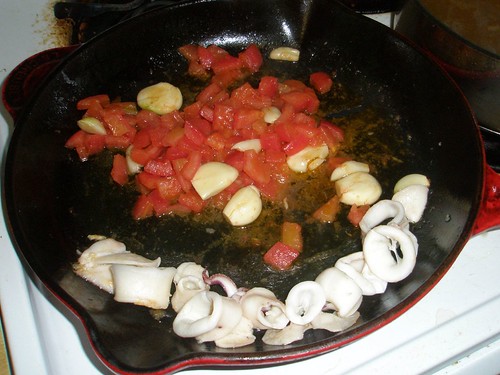
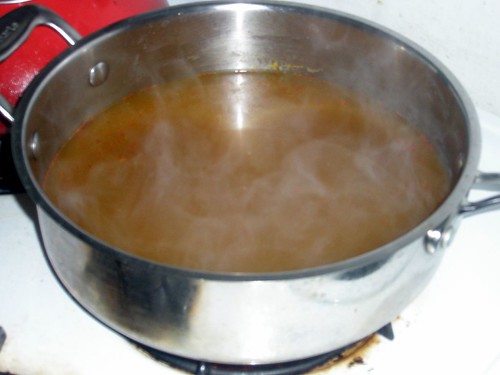
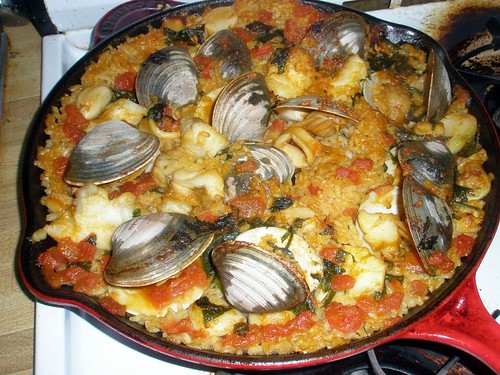
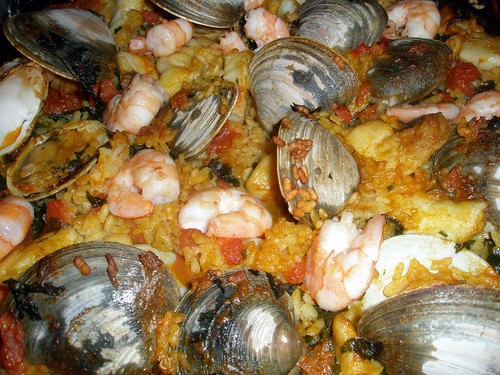
Having received rave reviews for my arroz con pollo I decided that it was time to move on to the next level of Spanish cuisine and attempt paella. Due to some last minute substitutions of chicken broth for shrimp broth (I didn't have the time to boil a bunch of shrimp shells) and pimenton for sweet paprika, not to mention my use of a skillet instead of the traditional paella pan, my dish was not 100% authentic. It was not the best, though by far not the worst, paella I've eaten, but it was certainly something I'll make again and improve upon; paella is not nearly as difficult or expensive to make as one might think. Below are some pictures of my paella project:

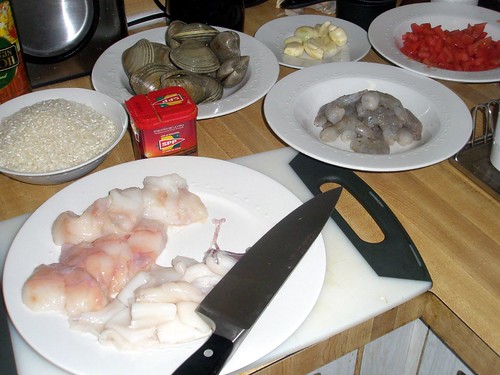
My mise en place (littleneck clams, monkfish, squid, shrimp, tomatoes, garlic, pimenton, bomba rice, olive oil):


Sauteing the squid, tomatoes, and garlic:


Meanwhile, the broth was simmering with a pinch of saffron:


In goes the broth with clams and the monkfish:


Out of the oven:


In go the shrimp, which I cooked separately:

Friday, July 10, 2009

Braised Soy Chicken with Thai Basil

For simple weeknight meals, I often turn to braised chicken dishes. They take very little time to prep and cook, tend to be friendly on the wallet, and provide me with plenty of leftovers to enjoy over the course of the week. Serve this Asian-style braised chicken with plenty of rice to soak up the braising liquid. If you can't find Thai basil, lemon juice would be another nice addition to the sauce.

Soy Braised Chicken with Thai Basil
Serves 4

Ingredients:
  • 2 lbs. chicken thighs and drumsticks
  • Salt
  • 3 tbsp. peanut oil
  • 8 cloves garlic, smashed with the side of a knife
  • 1 1-inch piece of ginger, peeled and minced
  • 1/3 cup Shaoxing wine (or dry sherry)
  • 1/4 cup soy sauce
  • 1 tbsp. double black soy sauce (a thicker, sweeter soy sauce)
  • 1 tbsp. sugar
  • 1/2 cup Thai basil, chiffonade

Directions:
  1. Lightly salt the chicken pieces.
  2. Heat the oil in a large, deep-sided skillet over medium-high heat.
  3. Add the chicken pieces to the skillet without crowding and cook until browned on both sides, about 5 minutes per side. If necessary, cook chicken in batches.
  4. Add garlic and ginger to skillet and cook until fragrant, about 1 minute.
  5. Add wine, soy sauces, and sugar to skillet. Boil, stirring constantly, for 5 minutes.
  6. Reduce heat to low and simmer until chicken is cooked through, about 5 minutes more. Remove from heat.
  7. Stir in Thai basil and serve.

Tuesday, July 7, 2009

Gooseberry Chutney

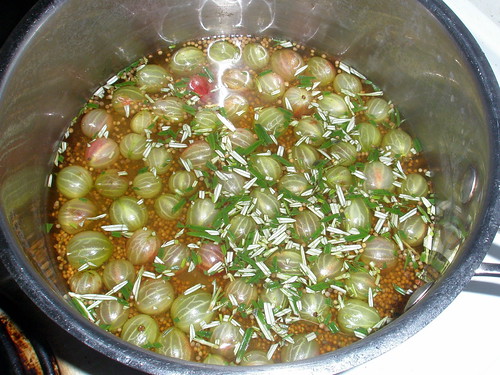
My brother, who is currently living in England recently asked me how to cook gooseberries, very tart berries that are prevalent in British markets. I told him that not only had I never seen gooseberries sold in the New York, but that even if they were sold here, I would not have the faintest idea of what to do with them. A recent trip to the Union Square Greenmarket proved me wrong, as I did find gooseberries for sale. Determined to cook a gooseberry recipe that would provide me with an answer to my brother's question, I purchased a pint of the berries.

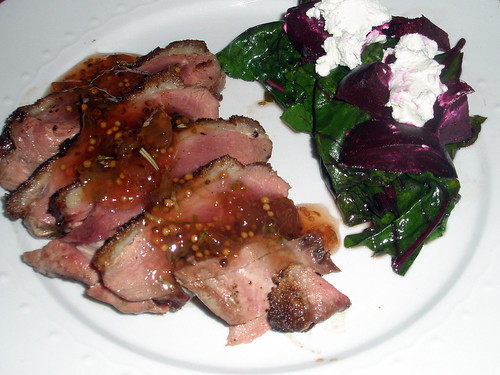
Thinking that a gooseberry dessert would be too predictable, I opted to make a gooseberry chutney that I adapted from a recipe in Matt Tebbutt Cooks Country, a cookbook I purchased on my recent trip to London. I served the chutney atop seared duck breasts. The sweet and tart chutney played a wonderful counterpoint to the rich duck. I think even a Londoner-- or my brother-- would approve.


Gooseberry Chutney
Adapated from Matt Tebbutt Cook s Country

Ingredients:
  • 1 pint gooseberries
  • 1/3 cup cider vinegar
  • 200g sugar
  • 1 tbsp. rosemary, finely chopped
  • 1/2 cup dry sherry
  • 2 tbsp. mustard seeds, toasted
  • salt and pepper, to taste

Directions:
  1. Combine all ingredients in a medium sauce pan. Bring to a boil over medium heat, then reduce heat to low. Simmer until chutney thickens to a jam consistency, 15 to 20 minutes.

Sunday, July 5, 2009

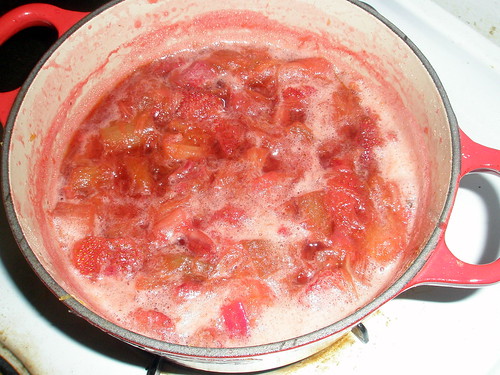
Strawberry Rhubarb Compote


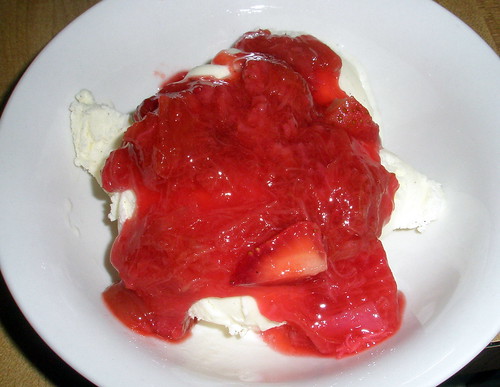
Making a batch of strawberry rhubarb compote was the perfect way to celebrate a gorgeous July 4th weekend. This recipe is adapted from Thomas Keller's Bouchon. It is delicious as a topping for ice cream, pound cake, yogurt, you name it.

Strawberry Rhubarb Compote
Makes approximately 4 cups

Ingredients:
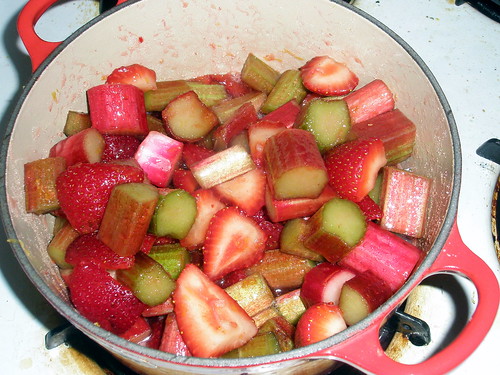
  • 1 lb. strawberries, cleaned quartered
  • 1 lb. rhubarb, cleaned and trimmed and cut into 3/4 inch pieces
  • 1 tsp. lemon zest
  • 1 tbsp. lemon juice
  • 3/4 cup sugar
Directions:
  1. Add all ingredients to a medium saucepan.
  2. Heat over medium-high heat and bring to a boil. Boil for about 4 minutes.
  3. Reduce heat to low and simmer for another two minutes.
  4. Remove from heat and bring compote to room temperature. Serve at room temperature or chilled.

Wednesday, July 1, 2009

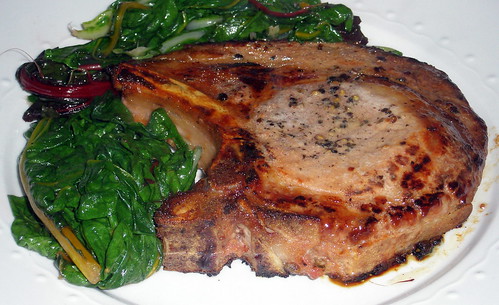
Honey-Glazed Pork Chops

As may be clear by the reduced frequency of my blog posts, I have been in a culinary creativity slump this week. I've stuck to simple, tried-and-true recipes, many of which I've posted on this very blog. My only new recipe was a this one for honey-glazed pork chops from Food and Wine. While the recipe was by no means inspiring enough to get my culinary juices flowing again, it added just enough excitement to a wonderful bone-in Berkshire rib chop I had in my freezer. Fortunately, with Independence Day weekend around the corner, I have lots of exciting restaurant outings planned for the next few days; perusing the menus of great restaurants is always the best way for me to recover from a slump in the kitchen.

LinkWithin

Related Posts with Thumbnails