Sunday, February 27, 2011

The Final Countdown begins with Pho


 I recently received the exciting news that I will be leaving New York in six months to become a full-time student for the next two years in a place that is a very far cry from New York.  While I am ecstatic to begin this new chapter in my life, I am going to be sad to leave behind all the people, places, and activities that have made my five years in New York so special, so like a person who's been told he has six months to live (and for me, the thought of enduring two years of cafeteria food and microwave dinners feels a bit like that), I have created a list of things to do before I leave this great city.  While my list includes a lot of special, only in New York activities (picnic in Central Park, run around the island of Manhattan), it also includes a category of items that most New Yorkers would not dare do: "Challenging Foods to Cook!"  In six months, I'll not only to be kitchen-less, but I'll also have limited time to do much cooking, so I have decided to try to make an effort all those foods that I have always wanted to make, but never made the time or the effort to cook.

First up on my cooking list was pho, the Vietnamese soup.  After making it, I realized that making pho is not at all the challenge I assumed it would be, although after about four hours of preparing it plus a couple more hours wandering the streets of Chinatown in search of the right ingredients, a $5 bowl at a pho joint seems like an even better deal.  I made pho bo, or beef pho, using thin slices of cooked brisket and raw sirloin, but the technique for pho ga (chicken pho) is fairly similar.


The first step to a great pho is to char the skins of the onions and ginger that go into the broth.  If you don't have a hood or a well-ventilated kitchen, it's best to do this step under a broiler or outside on a grill.  If you do, or you don't like me, but know you will be moving out of your apartment in six months, you can roast the vegetables over an open flame.  You want to char the ginger and onions completely, about 15 minutes, turning them frequently as they roast.  Once they are done, let them cool down.  Rinse the vegetables under cool water, peeling off the charred skins.


The central component of pho broth is, of course, the beef bones.  I used about 5 pounds of 2-inch thick shin bones. The first thing you'll want to do is to boil the bones in water for a few minutes, which will remove some of the impurities from the bones, allowing for a clearer broth.  Once boiled, drain the bones.


To make the broth, you combine the beef bones, the onions and ginger, a cinnamon stick, a spoonful each of cloves, star anise, sugar, and salt, a generous pour of fish sauce, and thick strips of brisket with six quarts of water.  Allow this mixture to simmer for an hour and a half.  Then, remove the brisket and continue simmering the broth for another hour and a half.  Drain the broth through a fine mesh sieve and refrigerate it overnight so that the fat solidifies.  The following day, remove the fat from the broth.


The day that you plan to serve the pho, prepare all of the condiments and set them on the table.  Lime juice, Thai basil, mint, blanched bean sprouts, Sriracha sauce, and hoisin are all go nicely with pho.

Once the broth is ready, prepare the bowls: boiled rice noodles, scallions, cilantro, thinly slice onions, thinly sliced cooked brisket, and thinly sliced raw sirloin.  Then pour the hot broth on top of it all.  It's perfection in a bowl.


Sunday, February 13, 2011

Cavatelli with Sausage & Browned Sage Butter


 As you may have noticed from the lack of posts on this blog the last few weeks, I have been very busy of late.  When I don't have time to cook, I usually fall into a boring routine of eating leftovers and takeout meals, but I do keep a few super simple recipes up my sleeve that take so little time and make such use of pantry and freezer staples that I have little excuse not to cook when pressed for time.  This pasta dish falls right into that category: store-bought fresh cavatelli (okay, maybe that's not such a pantry staple) tossed in a sausage and sage butter sauce.  The recipe, adapted from The Frankies Spuntino Kitchen Companion & Cooking Manual, which has quickly become a favorite of mine for simple recipes like this one, takes less than 30 minutes to prepare and you'd never know it because it's so full of flavor. 

Cavatelli Sausage & Browned Sage Butter
Adapted from The Frankies Spuntino Kitchen Companion & Cooking Manual

Serves 4

Ingredients:
  • 1 lb. hot Italian sausage links
  • 7 tablespoons butter
  • 10 sage leaves
  • pepper, to taste
  • 1 lb. fresh cavatelli
  • 1 cup grated Pecorino Romano cheese
  • 1/2 cup parsley leaves, finely chopped
Directions:
  1. Bring a large pot of salted water to a boil.
  2. Meanwhile, place the sausages in a large saute pan.  Fill the pan with enough water to come half way up the sausage links.  Heat the pan over medium heat and cook for 10 minutes.  Turn the sausages and cook on the other side for 5 minutes. Remove the sausages from the pan and slice into 1/2 inch slices.  Set the sausage aside.
  3. Melt 1 tablespoon of the butter over medium-high heat in a clean saute pan.  Add the sausage slices and let them cook, undisturbed, until they are well browned on one side, 3 to 4 minutes.  Flip the sausage slices and brown the other side, another 2 to 3 minutes.  Remove the sausage slices with a slotted spoon and place them on a paper towel-lined plate.  
  4. Return the pan to the burner and add the remaining 6 tablespoons of butter, pepper, and sage leaves to the pan.  Stir the butter with a wooden spoon, scraping the bottom of the pan to dislodge any brown bits.  Let cook until it is well browned, about 5 minutes.
  5. Meanwhile, while the butter sauce is browning, place the cavatelli into the boiling water and cook until al dente.
  6. Drain the pasta and add it to the butter.  Stir in the sausage and Pecorino Romano cheese and serve immediately, topping each serving with a pinch of the chopped parsley.

Thursday, January 27, 2011

Trippa alla Parmagiana in Photos

I'm not sure what's gotten into me of late, but I've cooked more offal in the last two weeks than I've ever eaten in my life.  Maybe it's a quarter life crisis I'm going through.  Or maybe it's the weekly six-plus inch snowfalls that NYC has been experiencing of late.  Or maybe it's the impending financial armageddon that all those loud mouths on CNN and Fox News keep speaking of that's persuaded me to master cooking the less desired cuts of meat.  Whatever's causing my recent fascination with offal, I'm enjoying the challenge.

My latest offal experiment was Trippa alla Parmigiana, a tomato-based stew full of the rubbery stomach lining of a cow that we all know as tripe.  It's a classic Italian dish, and I used Andrew Carmellini's recipe from Urban Italian.  Below is a photo log of the technique for making this simple stew that is so full of flavor that  those who are horrified by the thought of tripe might not even hate it all that much.

I have to admit, tripe is not one of the better-looking cuts, even as offal goes:


The rest of my mise en place:

First, I boiled the tripe in salted water for about 15 minutes:

Then I cut up the tripe into medium-size strips:


Next, I moved onto making the stew.  First up was the onions, which I sauteed in olive oil:


Then I coated the tripe pieces and the onions with a mixture of melted butter and red pepper flakes:


I added a white wine, a can of San Marzano tomatoes, and a mixture of veal and chicken stock and brought everything to a boil.


I then covered the stew and popped it into a 300F oven for 3 hours.  Once out, uncovered it, added a bunch of sliced carrots and celery, and allowed it to simmer on the stove for another hour until it was nice and thick:


I seasoned the stew and voila:


Oh wait, it needs one more thing to make it perfect:

Thursday, January 20, 2011

Red Curry Snapper Soup


I love a traditional Southeast Asian curry made with coconut milk and served over plenty of Jasmine rice.  But if you want to lighten it up and make something that is just as flavorful, you can make curry soup by using pretty much the same ingredients, but subbing out the coconut milk with water, just like I have done here using my recipe for red curry paste.  While I find the curry flavors complement seafood, curries made with coconut milk tend to overpower the fish, so I used the opportunity to make a curry soup with a whole red snapper that I marinated in lime juice.  Although the dish has a soupy consistency, it is best served over a bed of steamed Jasmine rice to sop up all the liquid.


Red Curry Snapper Soup
Serves 4

For the curry paste:
  • 1 tsp cumin seed
  • 1 tbsp coriander seed (use another teaspoon if not using coriander root)
  • 1 tsp white peppercorns
  • 5 dried Thai chilies, seeded and soaked in warm water
  • 1 tsp salt
  • 5 small shallots, thinly sliced
  • 10 garlic cloves, peeled
  • 1 tsp galangal, thinly sliced
  • 1 tbsp lemongrass, thinly sliced
  • 1 tbsp Kaffir lime rind, thinly sliced (discard the green peel and use the white pith)
  • 2 tsp coriander root, finely chopped
  • 1 tsp shrimp paste  
  1. Toast the cumin, coriander seeds, and peppercorns in a dry skillet over medium heat until they are fragrant and begin to pop.  Place them in a mortar and pound them with a pestle until they are finely ground.  Remove the spices from the mortar and set them aside.
  2. Add the dried chilies and salt to the mortar.  Pound the chilies to a paste.
  3. Add the shallots, garlic, galangal, lemongrass, lime rind, and coriander root to the mortar.  Pound the ingredients with the pestle until they form a paste.  
  4. Return the ground spice to the mortar along with the shrimp paste and use the pestle to mix the paste together. 
  5. Set three tablespoons of the curry paste aside for the curry.  The remaining paste can be frozen for up to 6 months. 
For the soup:
  • 1 whole red snapper, cleaned and cut crosswise into 2-inch pieces
  • juice of 2 limes
  • 3 tbsp peanut oil
  • 1 batch curry paste, see above
  • 8 kaffir lime leaves
  • 1 1/2 cup water
  • salt, to taste
  • palm sugar, to taste
  • leaves from 1 bunch of Thai basil
  1. Place the snapper in a nonreactive bowl.  Toss it well with the lime juice and allow it to marinate for 30 minutes.
  2. Heat the olive oil in a large pot over medium heat.  Add the curry paste and cook, stirring frequently so that it does not burn.  Cook until the curry paste is deeply fragrant, about 5 minutes.
  3. Add the snapper, its marinade, the lime leaves, and the water to the pot.  Bring to a gentle simmer and cook, flipping the snapper pieces occasionally, until the fish is cooked through, about 10 minutes.
  4. Add the Thai basil and taste the soup for salt and palm sugar.  Serve immediately.

Tuesday, January 18, 2011

Bay Scallops with Orange Sauce


 I'm not usually a fan of citrus-based sauces, which are all too often much too sweet for my taste. I was apprehensive about making this dish—sweet scallops combined with an orange sauce sounds like a cloyingly sweet combo—but I was surprised at how much I enjoyed it.  Thanks to the smart inclusion of a bit of lemon juice in addition to the orange juice, the sauce has tart undertones, and the addition of herbes de Provence and dried oregano give it just the right savory notes to ensure that it stays well shy of being a melted creamsicle.  I wish I could pat myself on the back for creating the perfect citrus-based sauce, but all credit goes to Andrew Carmellini and his cookbook in which the dish appears, Urban Italian.

Monday, January 17, 2011

Ribeye with Thyme, Shallot, and Garlic Pan Sauce


Like a beautiful woman, a great piece of beef needs little done to it to make it drool-inducing.  Here, I used my usual sear on the stove, roast in the oven method for steak on a well-marbled ribeye, serving it with a buttery thyme, shallot, and garlic pan sauce.  Oh yeah, and fingerling potatoes roasted in duck fat.  It was date night with a beautiful steak, and boy was she delicious.


Thursday, January 13, 2011

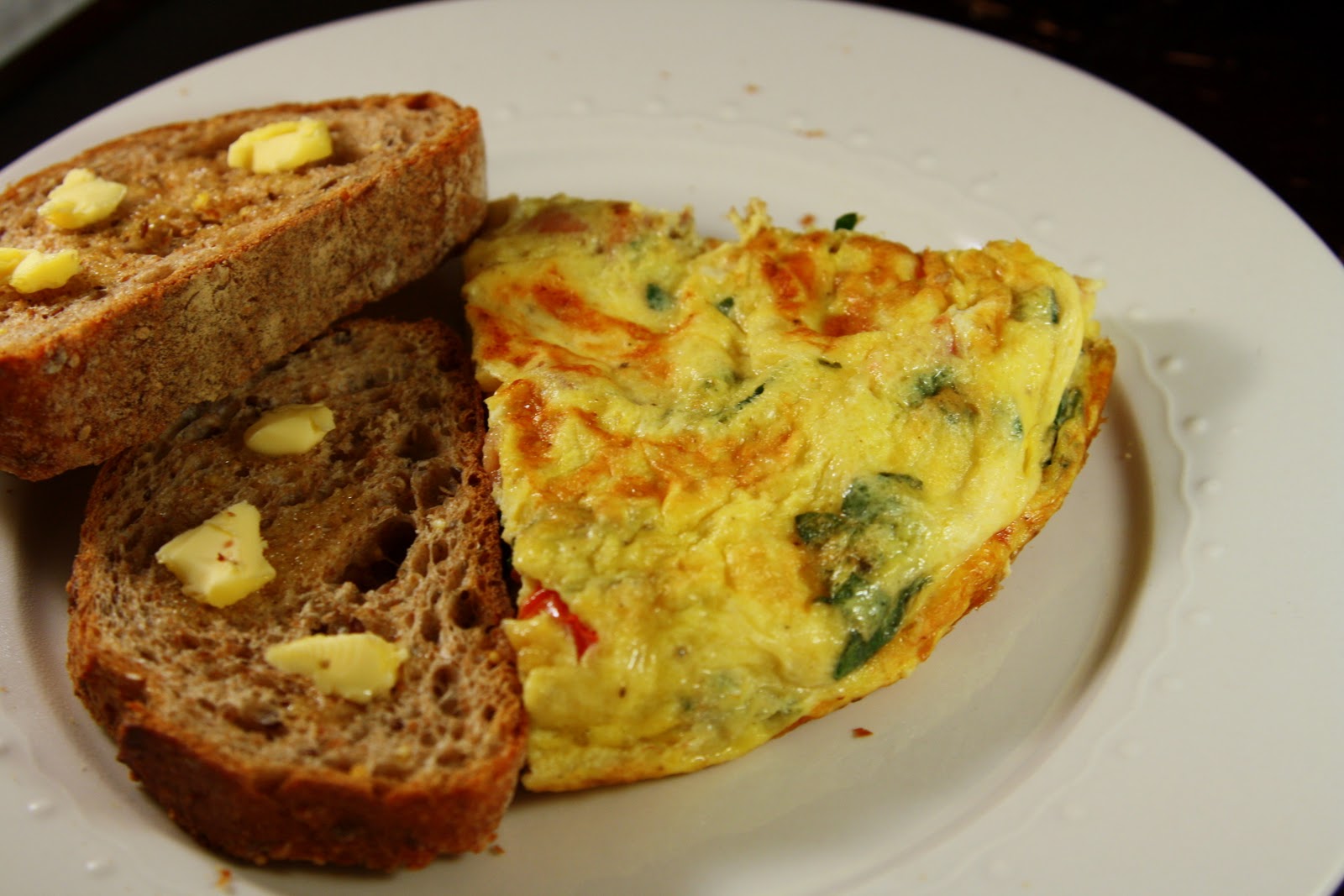
Prosciutto-Mozzarella Frittata


Prosciutto, mozzarella, basil, and tomatoes go well together in almost anything, whether it be a pizza, a salad, or a panini.  Frittatas happen to be my favorite vehicle for playing the game of "let me throw a bunch of ingredients together and see what happens," so when I spotted this recipe from Food and Wine for a frittata containing the Italian quartet of ingredients, I couldn't resist.  As expected, they worked flawlessly together even when mixed together with lots of eggs, producing a very filling and satisfying brunch dish.

As a note, I make all of my frittatas using Calphalon's frittata pan, a two skillet set that allows you to flip the frittata without creating a mess.  Given my tendency to be a klutz in the kitchen, the frittata pan has saved me many hours of wiping eggs from my stove and walls.  I highly recommend it.


Prosciutto-Mozzarella Frittata
Adapted from Food and Wine
Serves 6

Ingredients:
  • 10 large eggs
  • 1/4 cup milk
  • 2 tbsp Pecorino Romano cheese
  • 2 tbsp chopped basil
  • 3/4 tsp salt
  • 1/2 tsp pepper 
  • 3 tbsp olive oil
  • 2 medium shallots, thinly sliced
  • 1 plum tomato, cored, seeded, and diced
  • 4 slices prosciutto, cut into strips
  • 4 ounces fresh mozzarella, cubed
Directions:
  1. In a large bowl, beat together the eggs, milk, Pecorino Romano cheese, basil, salt, and pepper.
  2. Heat 2 tbsp of the olive oil in the deep half of a frittata pan over medium heat.  Add the shallots and cook until they soften, 2 to 3 minutes.  Add the prosciutto and tomato and cook for a minute.  Use a spatula to spread the tomatoes and prosciutto across the bottom of the pan so that they are well distributed.
  3. Add the egg mixture to the pan.  Use a spatula to push the cooked pieces of egg to the middle of the pan and allow the uncooked eggs to flow to the outer edges.  Cook for 3 minutes.
  4. Poke the mozzarella cheese into the eggs so that the cubes are evenly distributed.  Continue to cook the frittata until it is nearly set, another 5 to 7 minutes.  During the last 2 minutes of cooking, heat the remaining tablespoon of olive oil in the shallow half of the frittata pan set over medium heat.
  5. Place the shallow pan on top of the deep pan and flip the frittata.  Keeping the shallow pan covered with the deeper pan, cook the frittata for 4 minutes. 
  6. Uncover the shallow pan and continue to cook the frittata until it is completely set, approximately 5 minutes.
  7. Use a spatula to slide the frittata onto a plate and cut it into wedges for serving. 

LinkWithin

Related Posts with Thumbnails