Showing posts with label dinner. Show all posts

Sunday, February 13, 2011

Cavatelli with Sausage & Browned Sage Butter


 As you may have noticed from the lack of posts on this blog the last few weeks, I have been very busy of late.  When I don't have time to cook, I usually fall into a boring routine of eating leftovers and takeout meals, but I do keep a few super simple recipes up my sleeve that take so little time and make such use of pantry and freezer staples that I have little excuse not to cook when pressed for time.  This pasta dish falls right into that category: store-bought fresh cavatelli (okay, maybe that's not such a pantry staple) tossed in a sausage and sage butter sauce.  The recipe, adapted from The Frankies Spuntino Kitchen Companion & Cooking Manual, which has quickly become a favorite of mine for simple recipes like this one, takes less than 30 minutes to prepare and you'd never know it because it's so full of flavor. 

Cavatelli Sausage & Browned Sage Butter
Adapted from The Frankies Spuntino Kitchen Companion & Cooking Manual

Serves 4

Ingredients:
  • 1 lb. hot Italian sausage links
  • 7 tablespoons butter
  • 10 sage leaves
  • pepper, to taste
  • 1 lb. fresh cavatelli
  • 1 cup grated Pecorino Romano cheese
  • 1/2 cup parsley leaves, finely chopped
Directions:
  1. Bring a large pot of salted water to a boil.
  2. Meanwhile, place the sausages in a large saute pan.  Fill the pan with enough water to come half way up the sausage links.  Heat the pan over medium heat and cook for 10 minutes.  Turn the sausages and cook on the other side for 5 minutes. Remove the sausages from the pan and slice into 1/2 inch slices.  Set the sausage aside.
  3. Melt 1 tablespoon of the butter over medium-high heat in a clean saute pan.  Add the sausage slices and let them cook, undisturbed, until they are well browned on one side, 3 to 4 minutes.  Flip the sausage slices and brown the other side, another 2 to 3 minutes.  Remove the sausage slices with a slotted spoon and place them on a paper towel-lined plate.  
  4. Return the pan to the burner and add the remaining 6 tablespoons of butter, pepper, and sage leaves to the pan.  Stir the butter with a wooden spoon, scraping the bottom of the pan to dislodge any brown bits.  Let cook until it is well browned, about 5 minutes.
  5. Meanwhile, while the butter sauce is browning, place the cavatelli into the boiling water and cook until al dente.
  6. Drain the pasta and add it to the butter.  Stir in the sausage and Pecorino Romano cheese and serve immediately, topping each serving with a pinch of the chopped parsley.

Sunday, January 9, 2011

Shrimp Wrapped in Pancetta and Sage


 For my weekday meals, I tend to fall into a monotonous rotation of sauteed chicken breasts and pork chops served with not very imaginative pan sauces.  It's not that I especially love these meals (although I have been known to throw together a darn good pan sauce), it's just that after a long day of work, the last thing I want to do is to struggle with a new recipe, so I stick to the familiar.  I'm always excited when I do go out on a limb and discover a new recipe like this one for shrimp wrapped in pancetta and sage that is simple enough for weeknights.  Thanks to my Manhattan stomping grounds, I do have the luxury of having a market between my office and my apartment that sells both very fresh shrimp and high-quality pancetta, so assuming you can find those two components of the ingredient list, this recipe is as easy as it gets.  It is also quite tasty with the shrimp and crispy pancetta creating somewhat of a high-end hot pocket, perfect for eating on the couch after a harrowing day. 


Shrimp Wrapped in Pancetta and Sage
Serves 2 to 3

Ingredients:
  • 1 lb shrimp, peeled and deveined, tails left on
  • pepper
  • 1 bunch sage
  • 1/4 lb pancetta, thinly sliced
  • 1 tbsp olive oil
Directions:
  1. Lay the shrimp out on a cutting board.
  2. Season the shrimp with pepper.  There is no need to salt the shrimp as the pancetta is very salty.
  3. Place a sage leaf on top of each shrimp.
  4. Wrap a slice of pancetta around each shrimp.
  5. Heat the olive oil in a large skillet until just before smoking.
  6. Gently place the shrimp in the skillet.  Cook without disturbing for 2 minutes then flip each shrimp using a spatula.  Cook the other side until the shrimp are pink and no longer translucent, another 1 to 2 minutes.  Remove the shrimp from the pan and serve immediately. 

Thursday, January 6, 2011

Porchetta


As the second weekend of the new year approached, I’m assuming that everyone’s resolutions to eat better are about to be postponed until January 1, 2012.  Who wants chicken breasts and brown rice when you can have a succulent pork shoulder wrapped stuffed with fennel and onions and wrapped with pancetta?  It’s time to fall of the wagon and have some porchetta.


Although the traditional porchetta involves roasting a whole pig, I decided that that may be just slightly too ambitious to do in a studio apartment, so my porchetta only uses meat from shoulder, one of the most flavorful and economical cuts of the pig.  Porchetta comes in many shapes and forms, and I like to keep mine simple so that the meat shines rather than the filling.  The only thing to really focus on is the pork.  Be sure to pick out a well-marbled pork shoulder with a thick fat cap on top which will keep the meat moist throughout the cooking process.  A fatty piece of pork will make falling off the wagon for porchetta all the more worth it. 


Porchetta
Serves 6 to 8

Ingredients:
  • 1 3 to 4 lb. boneless pork shoulder, butterflied
  • salt and pepper
  • 3 tbsp olive oil
  • 1 large yellow onion, thinly sliced
  • 1 fennel bulb, cored and thinly sliced
  • 6 garlic cloves, peeled and smashed
  • 1 tbsp rosemary, chopped
  • 1 tbsp fennel seeds, toasted
  • 1 tbsp black peppercorns, toasted and ground
  • 1/2 cup fresh breadcrumbs
  • 1 egg
  • 1/4 lb. pancetta
Directions: 
  1. Preheat the oven to 350F
  2. Season the pork on all sides with salt and pepper.
  3. Heat the olive oil in a medium skillet over medium heat.
  4. Add the fennel, onion, garlic, fennel, rosemary to the skillet and season with salt and pepper.  Cook, stirring occasionally, until the vegetables are very soft, about 10 minutes. Remove the onion and fennel from the pan and allow to cool to room temperature in a medium bowl.
  5. Once the fennel and onion mixture is at room temperature, mix in the fennel seeds, peppercorns, breadcrumbs, and egg, stirring well to combine.
  6. Tie the pork shoulder with butchers twine, tying knots spaced one-inch apart across the length of the pork shoulder.
  7. Put the pork shoulder in a small roasting pan or large skillet so that the fat cap is facing up. Drape the pancetta on top of the pork loin so that it is entirely covered. You will likely have some pancetta leftover. 
  8. Roast the pork shoulder until the internal temperature in the thickest part of the meat reaches 160F, 1.5 to 2 hours.
  9. Remove the porchetta from the pan and allow it to rest for 10 minutes.
  10. Slice the porchetta in 1-inch thick pieces and serve with the crispy bits of pancetta.  


    Sunday, January 2, 2011

    Lamb Chops with Artichokes, Olives and Capers

    After having this blog for over two years, I've managed to cook a lot of foods that I otherwise might not have attempted if I did not have the blog to keep me searching for challenges.  Artichokes are one ingredient that I had not yet gotten myself to cook.  With their green pineapple-like appearance, they just look like they would be a lot of work to prepare.


    While I like artichokes, I do not love them, and I assumed the effort they would take to cook would outweigh they satisfaction they would bring. However, it being New Year's Day yesterday, I was feeling particularly ambitious despite being slightly under the weather from the previous evening's debauchery.  I had purchased some lamb chops and wanted to do something interesting and festive with them.  I spotted a box of baby artichokes at the store and recalled a recipe in Thomas Keller's Ad Hoc at Home that paired lamb chops with artichokes.  Given my apprehensions about cooking artichokes in the first place, I'm not sure why I even considered a Thomas Keller preparation, which surely would be extremely nitpicky about trimming the vegetables just so and take twice as long as any other recipe; I'll blame my decision on the alcohol from the night before. 


    To my surprise, even going by Chef Keller's precise directions, the preparing the artichokes was no more difficult than peeling a carrot (and a lot less dangerous!).  Trim off the stem.  Cut off the outer leaves at the base. Trim the top 1/2 inch of the artichoke, and then they are ready to cook.  It's exactly as easy as it sounds.  As for the lamb chops, well they went perfectly with the Mediterranean sauce of the artichokes, olives, capers, and tomatoes.  I can only hope that this dish bodes well for 2011.


    Lamb Chops with Artichokes, Olives and Capers
    Adapted from Ad Hoc at Home
    Serves 2

    Ingredients:
    • 6 baby artichokes, cleaned and trimmed as per the instructions above
    • juice of 1 lemon
    • salt and pepper
    • 4 lamb loin chops
    • 3 tbsp olive oil
    • 2 garlic cloves, crushed and skin left on
    • 4 thyme springs
    • 1/2 cup pitted kalamata olives
    • 1 tbsp capers, drained
    • 1/4 cup canned roasted tomatoes
    Directions:
    1. Preheat the oven to 350F.
    2. Put the trimmed artichokes in medium bowl and cover with the water and lemon juice.  Stir the artichokes for a few seconds.
    3. Pour the artichokes and lemon water into a medium sauce pan.  If necessary, pour in additional water to cover.  Add a pinch of salt and place a damp kitchen towel on top of the artichokes to ensure that they remain completely submerged. Bring to a simmer over medium-high heat and cook until the artichokes are completely tender, 10 to 15 minutes.  Remove the artichokes to a medium bowl and add just enough of the cooking water to cover.  Set aside.
    4. Season the lamb chops on both sides with salt and pepper.
    5. Heat the olive oil in a large skillet over medium-high heat.
    6. Add the lamb chops and cook until well-browned on one side, 3 to 4 minutes.  Flip the lamb chops and cook the other side until well-browned, 2 to 3 minutes.  Add the garlic cloves and thyme to the pan.  Baste the chops occasionally with the fat in the pan.
    7. Place the skillet in the oven and cook until the lamb chops are cooked through, about 7 to 8 minutes for medium-rare.  Remove from the oven and allow the chops rest for 5 to 10 minutes. 
    8. While the lamb chops are in the oven, prepare the sauce.  Pour 1 tbsp olive oil in a medium sauce pan and heat over medium heat.  Add the artichokes and cook for about a minute.  Add the olives and capers and cook for another 30 seconds.  Add the tomatoes and cook for another 2 minutes.  Season the sauce to taste with salt and pepper.
    9. Serve the lamb chops immediately, topped with the artichoke sauce. 

    Tuesday, December 14, 2010

    Ground Pork with Shrimp Paste and Lemongrass


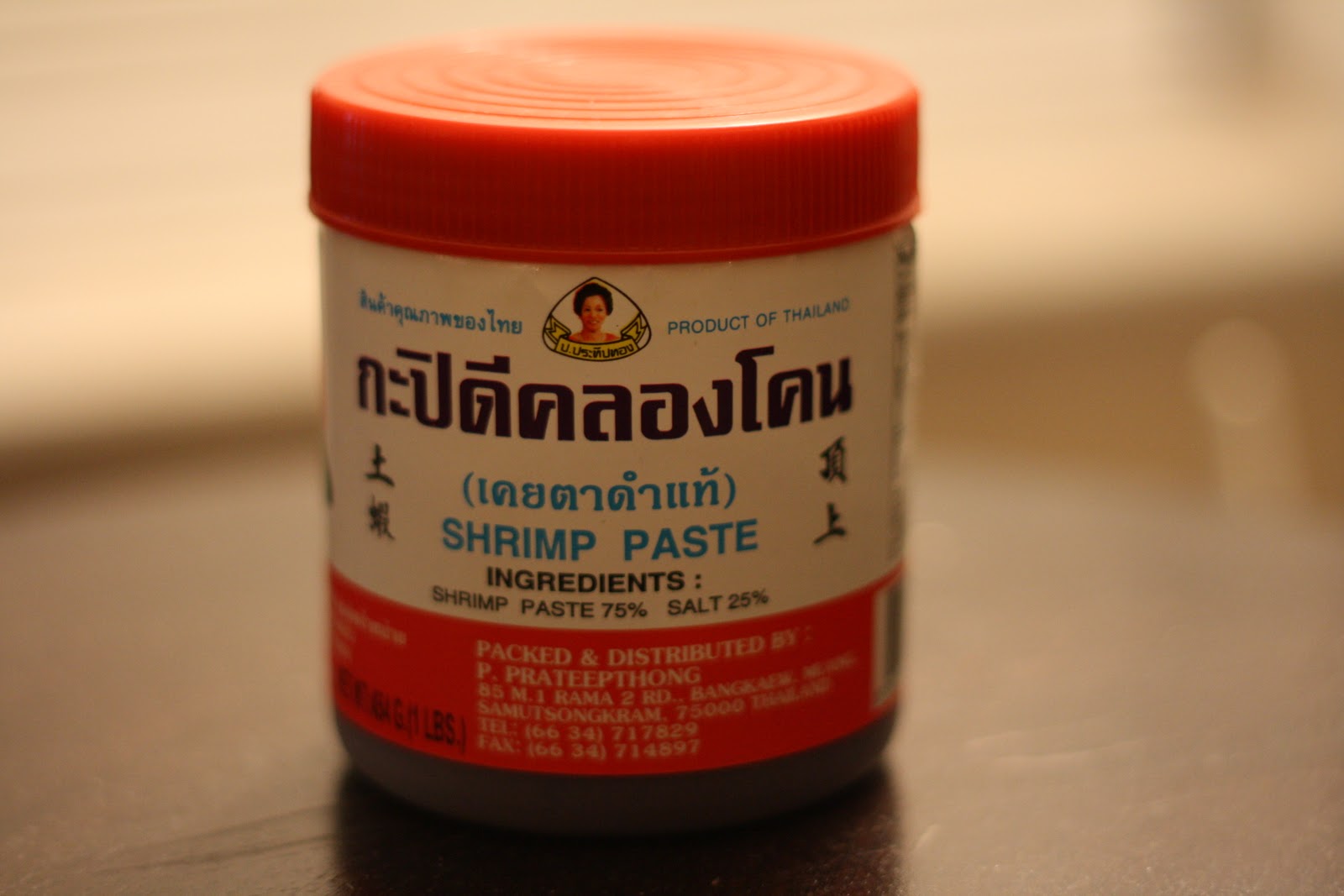
    I'll be the first to admit that shrimp paste isn't for the squeamish.  Pungent—and not in a good way—and pasty, for lack of a better word, the ingredient made of ground fermented shrimp might scare away even the most adventurous foodies.  However, as any lover of Southeast Asian cuisine is aware, shrimp paste makes pretty much everything taste better.  Just take Thai curry or papaya salad: yup, you guessed it, shrimp paste is an active player in their deliciousness.  As much as I try, I can't quite live off of curry and papaya salad, so I'm always looking for new ways to use up some of the jar of shrimp paste in my fridge. This pork recipe, loosely adapted from Andrea Nguyen's Into the Vietnamese Kitchen, was one of those attempts.  Typical of most Southeast Asian dishes, this one plays off of a contrast of flavors, with sweet, salty, and spicy well represented.  I still have half a jar of shrimp paste left, but I suspect I'll be purchasing more in no time.


    Ground Pork with Shrimp Paste and Lemongrass
    Serves 4

    Ingredients:
    3 tbsp peanut oil
    3 dried Thai chiles
    4 cloves garlic, minced
    3 lemongrass stalks, trimmed, cut in thirds, and pounded with the flat side of a knife
    1/2 pound ground pork
    12 shrimp, peeled, deveined, and minced
    1 tbsp sugar
    2 tbsp shrimp paste, diluted in 1/4 cup warm water
    1 tsp sesame seeds
    2 Kirby cucumbers, thinly sliced

    Directions:
    Heat the oil in a large skillet over medium-high heat.
    Add the chiles to the skillet and cook, stirring occasionally until they are fragrant and blackened.
    Add the garlic and lemongrass to the skillet and cook until the garlic is fragrant, about 1 minute.
    Add the pork to the skillet.  Use the back of a wooden spoon to break the pork up as it cooks, and cook until the meat is no longer pink, about 3 minutes.
    Stir in the shrimp, sugar, and shrimp paste and cook for about ten minutes, stirring occasionally, until the mixture caramelizes, turning a reddish brown.  If the pan dries out, add a tablespoon of water at a time.
    Remove the mixture from the pan and serve immediately with rice, topped with sesame seeds and garnished with the cucumbers.

    Sunday, September 26, 2010

    Project Food Blog Challenge #2: The Classics

    Many thanks to those who voted for my post for Challenge #1 of Foodbuzz's Project Food Blog!  Your votes got me to Challenge #2, "The Classics." The prompt for the second challenge reads:

    How well can you tackle a classic dish from another culture? We're bypassing the French and Italian standards in favor of more challenging cuisines.

    The competition for this challenge will be even tougher, so it's all the more important that everyone vote for their favorite posts.  Voting will commence at 9am EST on September 27.  You can vote for this post via my contestant profile.  Thanks in advance for your votes!

    For the second challenge, I decided to make a traditional Thai red curry, not only because of the challenge the dish would present, but also because I had at least one major doubter in my ability to pull it off.  Those of you who regularly follow this blog are probably aware that the Significant Eater is of Laotian heritage.  Although she loves and reaps the benefits of much of my cooking, she is skeptical any time I try to cook the Southeast Asian cuisine that she grew up eating.  Although I have been successful in past efforts--Significant Eater had been particularly impressed with the authenticity of my larb--, pounding out a curry paste from scratch and making a great curry would at last calm her fears of seeing me in the kitchen with fish sauce and shrimp paste in hand.


    My mission began in Chinatown at Bangkok Center Grocery, the best place in Manhattan to purchase Thai ingredients.  The friendly store clerk, who no doubt had the same misgivings as the Significant Eater when I told him I was making red curry, helped me find many of the ingredients that I would need to prepare the dish: galangal, lemongrass, coriander seed, white Kaffir limes and lime leaves, shrimp paste, bird's eye chilies, Thai basil, palm sugar, and coconut milk.  Unfortunately, the store had sold out of fresh coriander root, so I decided to double the amount of coriander seeds in the recipe and hope for the best (thankfully, it worked out).

     Most importantly, I also purchased a beautiful granite mortar and pestle that would help me pound out a perfectly textured curry paste. I picked up the vegetables I would need for the curry, long beans and Asian eggplant, from another Chinatown grocer, and was on my way home to start cooking.
     

    The most challenging part of making a curry is preparing the curry paste.  Although it can be easily blended in a food processor, using a mortar and pestle will give the curry paste a better texture, and is also a much more Project Food Blog-worthy method.

    The first step is to toast the spices (coriander, white peppercorns, and cumin seeds) in a dry skillet.  I toasted them until they were fragrant and beginning to crackle.  Once toasted, I tossed them into the mortar and pestle and began pounding away.


    The Significant Eater chided me for my apparently weak mortar and pestle skills, letting me know that her 90-year-old grandmother not only makes curry paste faster than I, but also does so using a pestle that is twice as large as mine.  Once I got over my pestle envy, I rolled up my sleeves and began pounding away at the spices with more aggression.


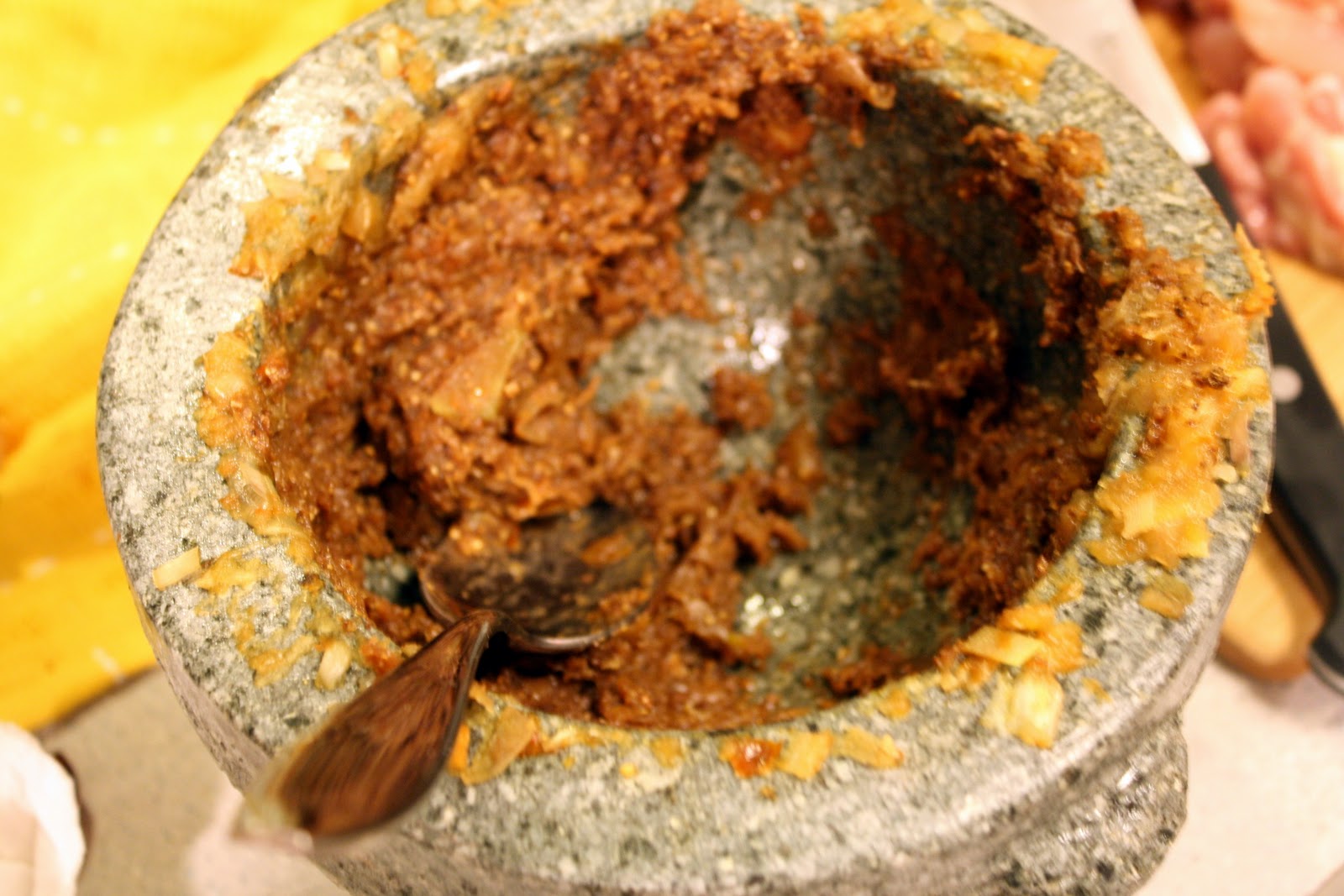
    Once the spices were ground to a fine powder, I set them aside and placed the shallots, garlic, soaked dry chilies, salt, galangal, lemongrass, and Kaffir lime rind in the mortar and once again began pounding them with the pestle.  To say this step was labor-intensive is an understatement; it took over fifteen minutes, with a few breaks in between, before I was able to pound out all of the chunks in the paste. 


    Finally, I added the ground spices and the extremely pungent shrimp paste to the mortar and mixed the paste together.  With a sore arm, I had finally completed the curry paste.  One thing is for sure: if I make curry paste a few times a week, I will no longer need to pay for a gym membership. 

    And another thing that's for sure is that curry paste sure ain't the prettiest.


    Fortunately, once I had prepared the curry paste, the rest of the curry was fairly easy to make.  First, I fried some of the paste in a bit of peanut oil until it was fragrant.  Then, I tossed in the chicken and stir fried it until it was cooked through.  Once done, I added in about half a can of coconut milk along with the long beans and chopped Kaffir lime leaves, and let it all simmer away for several minutes.  I then added the fish sauce, palm sugar, and eggplant and kept everything simmering until the eggplant was soft.  Finally, I tossed in the Thai basil.  The curry was ready!


    I was a bit concerned that the curry was not as red in color as I expected it to be, but it certainly smelled and tasted like a Thai curry.  Of course, the only opinion that mattered was that of the Significant Eater herself.  I watched her with great trepidation as she spooned a small amount of the curry onto her plate and took her first bite.  Silently, she then proceeded to scoop out several more spoonfuls onto her plate.  Finally, she exclaimed, "Perfect!"

    I have a feeling that she'll be allowing me to cook with my fish sauce and shrimp paste more frequently from now on.


    Red Curry Chicken ("gang phet" in Lao)
    Serves 4

    For the curry paste:
    • 1 tsp cumin seed
    • 1 tbsp coriander seed (use another teaspoon if not using coriander root)
    • 1 tsp white peppercorns
    • 5 dried Thai chilies, seeded and soaked in warm water
    • 1 tsp salt
    • 5 small shallots, thinly sliced
    • 10 garlic cloves, peeled
    • 1 tsp galangal, thinly sliced
    • 1 tbsp lemongrass, thinly sliced
    • 1 tbsp Kaffir lime rind, thinly sliced (discard the green peel and use the white pith)
    • 2 tsp coriander root, finely chopped
    • 1 tsp shrimp paste 
    1. Toast the cumin, coriander seeds, and peppercorns in a dry skillet over medium heat until they are fragrant and begin to pop.  Place them in a mortar and pound them with a pestle until they are finely ground.  Remove the spices from the mortar and set them aside.
    2. Add the dried chilies and salt to the mortar.  Pound the chilies to a paste.
    3. Add the shallots, garlic, galangal, lemongrass, lime rind, and coriander root to the mortar.  Pound the ingredients with the pestle until they form a paste.  
    4. Return the ground spice to the mortar along with the shrimp paste and use the pestle to mix the paste together. 
    5. Set three tablespoons of the curry paste aside for the curry.  The remaining paste can be frozen for up to 6 months. 
    For the curry:
    • 2 tbsp peanut oil
    • 3 tbsp curry paste
    • 1 lb. boneless, skinless chicken thighs, cut into bite-size pieces
    • 1 1/2 cups Chinese long beans, chopped into 1-inch pieces
    • 1/2 of a 13.5 oz. can of coconut milk
    • 1 1/2 tsp palm sugar
    • 2 tbsp fish sauce
    • 1 Asian eggplant, sliced into half-moon-shaped pieces
    • 2 fresh Thai chilies, thinly sliced
    • 1/2 cup fresh Thai basil leaves
    1. Heat the peanut oil in a large saute pan with high sides over medium-high heat. 
    2. Add the curry paste to the pan and cook, stirring constantly, until the paste is extremely fragrant, 3 to 5 minutes.
    3. Add the chicken to the pan and increase the heat to high.  Cook, stirring constantly, until the chicken is nearly cooked through, 3 to 5 minutes.  
    4. Reduce the heat to medium and add the coconut milk, long beans, and lime leaves to the pan.  Bring the coconut milk to a simmer, stirring frequently, until it thickens slightly, about 5 minutes.  
    5. Add the palm sugar, fish sauce, chilies, and eggplant to the pan.  Continue to simmer the curry until the eggplant is cooked through, about about 3 minutes.
    6. Taste the curry for seasoning.  If it needs salt, add a small amount of fish sauce.  If it is not sweet enough, add a small amount of palm sugar.  If it is not hot enough, add additional chilies.  
    7. Add the basil leaves to the curry and serve it with steamed Jasmine rice. 

    Monday, September 20, 2010

    Bacon and Corn Risotto


    I love risotto almost as much as I love sweet summer corn, so corn risotto has been on my cooking wish list for some time.  I don't know what took me so long to make it, as it's a truly awesome dish, especially when enhanced with a healthy dose of bacon--corn and bacon are a match made in heaven.  The key to the risotto is the corn broth; you add the entire cob, all of the husk, and even the string to a pot full of water and allow it to simmer for an hour.  What you end up with is a light broth that imbues the risotto with wonderful corn flavor.

    Bacon and Corn Risotto
    Serves 2 to 3

    Ingredients:
    • 2 ears of corn, unshucked
    • 6 cups water
    • salt and pepper
    • 1/4 lb smoky bacon, diced
    • 1/2 yellow onion, diced
    • 1 cup Arborio rice
    • 1/2 cup white wine
    • 1 tbsp butter
    • 1/4 cup freshly grated Parmesan cheese
    Directions:
    1. Shuck the ears of corn, trimming off any browned parts of the husks.  Place the husks and the strings in a large stock pot.  
    2. Remove the kernels from the corn cobs and set them aside in a bowl.  Chop each cob into three equal-sized pieces and add them to the stock pot.
    3. Fill the stock pot with 6 cups of water and bring it to a boil.  Reduce the heat to a simmer and partially cover the pot.  Simmer the corn trimmings for 1 hour.  Season with salt and pepper and keep the corn broth warm.  
    4. Add the bacon to a medium-size saucepan and heat over medium heat.  Cook, stirring occasionally, until the bacon is slightly crispy, about 3 minutes.  Remove the bacon with a slotted spoon and set it aside.
    5. Pour off all but 2 tbsp of bacon fat from the pan and reduce the heat in the pan to medium-low.  Add the onion.  Cook, stirring occasionally, until the onion is soft and translucent, about 10 minutes.
    6. Increase the heat to high.  Add the rice and cook, stirring constantly, until the rice begins to crackle, about 2 minutes.
    7. Pour the wine into the sauce pan.  Stir the contents of the pan constantly until the rice has absorbed all of the wine, 1 to 2 minutes.  
    8. Reduce the heat to medium.  Holding a strainer over the saucepan, ladle in just enough of the corn broth to cover the rice.  Keeping the risotto at a simmer, constantly stir the rice until it has absorbed nearly all of the broth.
    9. Stir the corn kernels into the rice.  Passing the brother through the strainer, add enough to barely cover the rice.  Stir the rice until it has absorbed the broth.  
    10. Continue to add just enough broth to cover the rice and stir it constantly until the rice is soft and the risotto is creamy.  This will require at least 2 cups of broth total. 
    11. Remove the saucepan from the heat.  Stir in the butter and Parmesan cheese.  Season the risotto with salt and pepper and serve immediately.
      

    Monday, August 23, 2010

    Pork Cheek Ravioli with Brown Butter Sage Sauce


     The inspiration for this dish began at Dickson's Farmstand Meats, which has become my butcher of choice in New York, not only for its dedication to selling humanely raised meats from local farmers, but also for the more esoteric cuts of meat that it sells.  It was at Dickson's that I spotted a sign for pork cheeks, and, as is the case with most meats that I am utterly clueless about cooking, I could not resist purchasing a pound of them.


    The one thing that I did know about pork cheeks was that they are a tough cut best suited to braising.  However, it being mid-August, a heavy braised dish was not exactly tempting.  I thought about making a pork cheek ragu, but that seemed too much within my comfort zone; I needed to do the pork cheeks some justice.  Staying on the pasta path, I decided that a ravioli stuffed with braised pork cheek would be the perfect way to serve pork cheeks in the summer.  The one problem was that I do not own a pasta maker.  However, I remembered hearing that it was possible to make ravioli using wanton wrappers, and that is exactly what I did.


    The results could not have been better.  The braised pork cheeks required three hours of braising time before they were meltingly tender.  Surprisingly, the delicate wanton wrappers were a pretty close substitute for freshly made pasta.  To ensure that the pork cheeks kept the lead role in the dish, I topped the pasta with a simple brown butter sage sauce, which I brightened with lemon juice to pare down the richness of the pork.  On my way home from the butcher, I had been worried about how I would manage to ruin the pork cheeks, but I can't imagine having them any better way. 


    Pork Cheek Ravioli with Brown Butter Sage Sauce
    Serves 4 

    For the pork:
    • 1 lb. boneless pork cheeks
    • salt and pepper
    • 2 tbsp olive oil
    • 2 cloves garlic, minced
    • 1 carrot, finely diced
    • 1 medium yellow onion, finely diced
    • 1/2 cup dry red wine
    • 1/2 cup canned diced tomatoes with their juice
    • 1 cup chicken stock
    • 1 bay leaf
    • 1 tsp fresh thyme leaves
    • 1/2 tsp dried red pepper flakes
    For the pasta:
    • 20 wanton wrappers
    • 4 tbsp unsalted butter
    • 10 sage leaves
    • juice from 1/2 lemon
    • salt and pepper
    • grated Pecorino Romano cheese, for serving
    Directions:

    For the pork (can be made one day ahead):
    1. Preheat the oven to 275F.
    2. Pat the pork cheeks dry with paper towls.  Season with salt and pepper.
    3. Heat the olive oil in a medium braising dish over medium-high heat.  Add the pork cheeks without crowding (cook in batches if necessary), and saute until well-browned on both sides, about 2 minutes per side.  Set the pork cheeks aside on a plate.
    4. Reduce the heat to medium and add the garlic, carrot, and onion.  Cook, stirring occasionally, until the vegetables soften and begin to brown, 5 to 10 minutes.
    5. Add the wine and bring it to a boil.  Reduce the wine by half, about 3 minutes.
    6. Pour in the tomatoes, stock, bay leaf, thyme, and pepper flakes.  Bring the liquid to a boil, then reduce the heat to a simmer.  Add the pork cheeks and any juices that have accumulated on the plate.  Season the dish with salt and pepper. 
    7. Cover the braising dish and place it in the oven.  Cook, flipping the pork the until the the pork cheeks can be easily shredded with a fork, approximately 3 hours.
    8. Remove the pork cheeks from the braising dish and set them aside on a plate.  If necessary, reduce the braising liquid so that it has almost a syrup-like consistency.  Season with salt and pepper. 
    9. Shred the pork cheeks with a fork and return to the braising liquid. Gently warm the dish prior to filling the ravioli.
    For the pasta:
    1. Bring a large pot of salted water to a boil.  Reduce the heat to a steady simmer (any more than a simmer will break the ravioli).
    2. Lay each of the wanton wrappers on a large flat surface.  Using a brush or your finger, wet the edges of half of the wrappers.  
    3. Place approximately 1 tbsp of the braised pork, with a bit of the braising liquid, on the ravioli with wet edges. 
    4. Place the remaining wanton wrappers over the pork, forming the ravioli.  Press down on the edges of each ravioli with your fingers to ensure that the edges stick together.  
    5. Use a fork to press down on the edges of each ravioli to form ridges.
    6. Place the ravioli in the pot of simmering water one at a time to ensure that they do not stick.  Cook until the ravioli float to the top of the water, approximately two minutes.  Carefully remove each ravioli from the pasta water with a slotted spoon.  Place 5 ravioli on each plate.
    7. As the ravioli cook, make the sauce by heating the butter over medium heat.  Once the butter has melted and begins to brown, remove it from the heat.  Stir in the sage leaves and lemon juice and taste for salt and pepper.  
    8. Pour a few spoonfuls of the brown butter sage sauce over the ravioli.  Top each plate with a small amount of grated Pecorino Romano.  Serve immediately. 

    Wednesday, August 18, 2010

    Spaghetti with Spicy Eggplant Marinara


    Having recently signed up for the 2010 Philadelphia Marathon, I can look forward to the three months of early morning runs, chafed nipples, and blood blisters on my toes that comes with readying my body for the 26.2 mile race.  The one good that comes from marathon training--aside from looser-fitting clothes--is that it brings on a constant craving for carbohydrates.  With beer and sweets being somewhat off-limits, I turn to pasta to get my carb fix, so be prepared for many pasta recipes the next few months.

    To kick off my training, I made a spicy marinara containing slices of fried eggplant and served it over a plateful of spaghetti.  Don't be intimidated by the fried eggplant; eggplant is one of the easiest foods to fry and creates minimal mess.  Just be sure to leave at least 30 minutes to salt the eggplant so that it releases all of its excess water.  Aside from that step, this dish is quick to prepare, and while I'm still looking for a super food to heal my blood blisters, it at least got me through my run the following morning.

    Spaghetti with Spicy Eggplant Marinara
    Serves 4

    Ingredients:
    • 1 large globe eggplant
    • 1 tbsp kosher salt
    • Canola oil, for frying the eggplant
    • 2 tbsp olive oil
    • 3 cloves garlic, minced
    • 1 28 oz. can peeled tomatoes with their juice, crushed by hand 
    • 2 tbsp parsley, chopped
    • 1 tsp hot red pepper flakes
    • 1 lb spaghetti
    • grated Pecorino Romano cheese, for serving
    Directions:
    1. Slice off each end of the eggplant.  Slice it into 1/4-inch thick pieces.
    2. Place the eggplant slices in a colander and toss with 1 tbsp salt.  Let the eggplant sit for at least 30 minutes.
    3. Rinse the eggplant and pat it dry with paper towels.
    4. Pour enough canola oil into a saute pan to come 2 inches up the sides.  Heat the oil to 350F.  
    5. Working in batches, add the eggplant to the pan without crowding or overlapping.  Fry until the eggplant begins is golden on one side, 2 to 3 minutes.  Flip the eggplant slices and fry until the other side is golden brown, another 2 to 3 minutes.  Using a slotted spoon, remove the eggplant to a plate lined with paper towels.  Repeat with the remaining eggplant slices.
    6. Heat the olive oil in a large sauce pan over medium heat.
    7. Add the garlic to the pan and stir until it turns golden, about 2 minutes.
    8. Add the tomatoes, parsley and pepper flakes to the pan and bring the mixture to a simmer.  Season it with salt.  Let the sauce simmer until it thickens to a desired consistency and the oil separates, about 30 minutes.  With about 10 minutes left, begin boiling the pasta as per the instructions on the package.
    9. Chop the eggplant slices into quarter-size pieces.  Add them to the sauce and continue to simmer for another 3 minutes.  Taste the sauce for salt and add more red pepper flakes if desired.
    10. Drain the pasta and add it to the sauce.  Serve the pasta immediately,  topped with grated Pecorino Romano cheese. 

    Wednesday, August 11, 2010

    Deviled Pork Chops


     I probably make deviled pork chops every other week.  They take little more effort than plain old pan roasted pork chops, but carry loads more flavor thanks to a coating of dijon mustard and paprika. My recipe is a riff on a Mark Bittman recipe; mine has the addition of paprika and makes a more robust pan sauce than his.  Nonetheless, this is still very much a minimalist recipe and makes for a killer weeknight meal.  For the dish in the picture, I used boneless sirloin chops from Dickson's Farmstand Meats in New York's Chelsea Market, but any sort of pork chops will work just as well so long as you alter the cooking time accordingly.

    Deviled Pork Chops
    Serves 2

    Ingredients:
    • 2 boneless sirloin pork chops, 1" thick
    • Salt and pepper
    • 1 tsp paprika
    • 1 tbsp Dijon mustard
    • 2 tbsp olive oil
    • 1 shallot, minced
    • 1/4 cup dry white wine
    • 1/4 cup chicken stock
    • 1 sprig thyme
    Directions:
    1. Season the pork chops on both sides with salt and pepper.  Rub the paprika over the pork chops, then rub them all over with the Dijon mustard.  Set the chops aside.
    2. Heat the olive oil in a 12-inch skillet over medium-high heat.  Once the oil begins to shimmer, add the pork chops.  Cook the pork chops until they are well browned on both sides, about 2 minutes per side.  
    3. Reduce the heat to low and continue to cook the pork chops until they are cooked through, about 3 to 4 minutes per side.  Remove the pork chops to a plate and tent them with foil to keep them warm. 
    4. Increase the heat to medium-high and add the shallots.  Stir them them for 1 minute, then pour in the white wine.  Bring the wine to a boil, using the back of a wooden spoon to dislodge the brown bits at the bottom of the pan.  Let the wine boil until it is almost completely reduced, about 2 minutes.  Pour in the chicken stock and the thyme and bring the liquid to a boil.  Reduce the liquid until it has thickened to a desired consistency, 2 to 3 minutes.  Pour in any liquid that has accumulated on the plate with the pork chops.  Taste the pan sauce for salt and pepper. 
    5. Serve the pork chops immediately with the pan sauce drizzled over top. 

    Tuesday, July 27, 2010

    Char Siu: Vietnamese Roast Pork Shoulder


    Every Sunday, I try to find time to cook a large meal with enough leftovers so that I get to skip out on cooking dinner at least a few nights during the week.  During the cooler months, my go to Sunday night meals tend to be braises.  In the warmer months, I go for roast meats, and my absolute favorite roast meat is char siu, a Vietnamese dish consisting of strips of pork shoulder strips that are marinated in a sweet soy sauce mixture, then roasted at very high heat so that the pork on a beautiful reddish brown color.   Crispy on the outside, with a healthy dose of juicy pork fat interspersed throughout the meat, absolutely no other roast meat beats char siu.  Best of all, unlike the usual monotony that comes with leftovers, leftover char siu lends itself to a wide variety of uses; I have tried it by itself, mixed in with fried rice, and over a bed of noodles.  Each preparation reminded me why I love the dish so much. 


    Char Siu
    Adapted from Into the Vietnamese Kitchen

    Ingredients:
    • 2 lb. boneless pork shoulder, well trimmed
    • 2 cloves garlic
    • 2 tbsp sugar
    • 1/2 tsp Chinese five-spice powder
    • 3 tbsp Hoisin
    • 2 tbsp honey
    • 1 1/2 tbsp Shaoxing rice wine
    • 2 tbsp soy sauce
    • 1 tbsp double black (thick) soy sauce
    • 2 tsp sesame oil
    Directions:
    1. Quarter the pork lengthwise into 1 1/2 inch thick strips.
    2. Combine all of the remaining ingredients in a large bowl.  Add the pork to the marinade and cover.  Refrigerate overnight, turning the pork a few times as it marinates to ensure that all sides are well-covered in marinade. 
    3. Preheat the oven to 475F.
    4. Place a flat roasting rack on a baking tray lined with foil.  Place the pork on the roasting rack and place it in the oven.  
    5. As the pork roasts, baste it with the marinade every ten minutes and turn the pork.  Roast until the pork begins to char on the outside and is cooked through, about 35 minutes.  
    6. Remove the pork from the oven and let it rest for 10 minutes.  Using a sharp knife, slice the pork strips into very thin slices.  Serve the pork as desired. 

    Sunday, July 25, 2010

    A Jambalaya for Gulf Oil Spill Relief


    Cajun food isn't something I usually consider cooking.  Don't get me wrong--I absolutely love the cuisine--but I associate Cajun food with huge rambunctious gatherings.  I'm thinking bowls full of gumbo, heaping plates of shrimp etouffee, a pot of steaming crayfish, and bananas foster all washed down with loads of Abita and some Professor Longhair tunes.  Slurping down gumbo in a small studio apartment by myself while watching a ballgame just doesn't come to mind when I think Cajun.  So forgive me for the "Gulf-inspired dinner" I cooked for the Significant Eater and myself.  It may just be a few servings of jambalaya, but thanks to the good folks at Foodbuzz, this dinner is so much more than just a plate of jambalaya; by cooking and blogging about it, $25 is donated to the Greater New Orleans Foundation's Gulf Coast Oil Spill Fund.  What better reason to start cooking Cajun than this?


    Jambalaya
    Adapted from Food & Wine

    Ingredients:
    •  1/4 cup olive oil
    • 12 oz. andouille sausage, slice into 1/4-inch thick pieces
    • 1 celery rib, finely diced
    • 3 cloves garlic, minced
    • 1 yellow onion, finely diced
    • 1 red bell pepper, finely diced
    • 1 1/4 cup white rice
    • 1 tsp. Old Bay seasoning 
    • 1 sprig thyme
    • 1 1/2 cups chicken stock
    • 1 1/2 cups water
    • salt and pepper
    • 4 oz. lump crab meat
    • 8 oz. small shrimp, peeled and deveined
    • 3 scallions, thinly sliced
    • Tabasco, for serving
    Directions: 
    1. Heat a large saute pan over high heat.  Add the olive oil and sausage and cook, stirring occasionally, until the sausage is browned on all sides, about 3 minutes.  Remove the sausage with a slotted spoon and reserve.  
    2. Add the bell pepper, celery, garlic, and onion to the olive oil.  Stir the vegetable so that they are coated in oil.  Cover the pan and cook, stirring occasionally, until the vegetables are soft and the onion is translucent, about 3 minutes. 
    3. Add the rice and Old Bay and stir to coat the rice with olive oil.  Cook until the rice is opaque, about 2 minutes.  
    4. Add the stock, water, and thyme to the pan.  Season lightly with salt and pepper and bring the liquid to a boil.  Reduce the heat to very low and cover the pan.  Cook until the rice is tender and the liquid is reduced, about 15 to 25 minutes.  Fluff the rice with a fork.
    5. Stir the shrimp, crab meat, and scallions into the rice and cover the pan.  Continue to cook until the shrimp is cooked through, 3 to 5 minutes.
    6. Taste the jambalaya for salt and pepper.  Serve it in bowls, topped with a few drops of Tabasco. 

    Wednesday, May 19, 2010

    Brined Pork Tenderloin with Salsa Verde


    A recent visit to Williamsburg, Brooklyn, brought me to The Meat Hook, one of two hipster-run butchers--the other being Marlow and Daughters--that has recently opened in the neighborhood.  Although I lauded these new school butchers for their focus on selling locally-sourced meats and offering off-cuts that are difficult to find elsewhere, I remained skeptical of  young, hip, personable butchers, and with nary a scar on their arms.  Could the cool butcher's at The Meat Hook possibly be better than the gruff, old-school butchers from whom I am more accustomed to purchasing my meat?  There was only one way to find out.

    Staring at the wide array of sausages and cuts in the meat case, I had no idea what to purchase.  Slightly intimidated by the butcher, who not only was better-looking than I, but could also break down a whole hog in the time it takes me to chop a bunch of parsley, I blurted out "I'll have what she's having," unsure of whether the lady in front of me was more excited by the butcher or the tenderloin from locally-bred pork that he was trimming for her.  The kind butcher went to the meat locker, pulled out a tenderloin and began trimming it for me.  Five minutes later, I was on my way back to Manhattan, pork tenderloin in hand. 

    Once home, I prepared the pork as simply as I could.  I brined it using Thomas Keller's brine from Ad Hoc at Home in order keep the lean meat moist as it cooked.  I seared it and then roasted the tenderloin as per Keller's instructions and topped it with a refreshing salsa verde.  Alongside the pork, I served roasted asparagus topped with a poached egg.  

    The verdict? While the brine no doubt helped make the pork exceptionally juicy and tender, I have to commend my butcher at the Meat Hook, who sold me an excellent piece of meat.  Eddie - 0, Meat Hook Butcher - 1. 

    Brined Pork Tenderloin with Salsa Verde
    Serves 6

    For the Brine:
    • 1/4 cup plus 2 tbsp honey
    • 12 bay leaves
    • 3 rosemary sprigs
    • 1/2 bunch thyme
    • 1/2 bunch parsley
    • 1/2 cup garlic cloves, crushed
    • 2 tbsp peppercorns
    • 1 cup kosher salt
    • 8 cups water
    For the Salsa Verde:
    • 1 cup parsley leaves
    • 1/2 tsp red pepper flakes
    • 1/2 cup bread crumbs, toasted
    • 1 clove garlic, peeled and crushed
    • 1/2 cup olive oil
    • 2 tbsp lemon juice
    • salt, to taste
    For the Pork:
    • 2 1 lb. pork tenderloins
    • salt and pepper
    • olive oil
    • 2 tbsp butter
    • 2 garlic cloves, crushed
    • 6 thyme sprigs
    • 2 rosemary sprigs
    Directions:
    1. Make the brine a day ahead of cooking the pork.  Combine the honey, rosemary, thyme, parsley, garlic cloves, peppercorns, kosher salt, and water in a large pot and bring to a boil.  Boil the brine for two minutes, stirring it well to dissolve the salt.  Remove the pot from the heat and bring it to room temperature.  Place the brine in the refrigerator and let it cool overnight. 
    2. Place the pork tenderloins in the brine and refrigerate them for 4 hours.  
    3. Meanwhile, prepare the salsa verde.  Combine the parsley leaves, bread crumbs garlic, and pepper flakes in the bowl of a food processor.  Pulse the mixture a few times until the ingredients are chopped and well-combined.  Then, slowly pour in the olive oil while running the food processor.  Blend until a smooth paste forms.  Stir in the lemon juice and taste for salt.  Set the salsa verde aside or refrigerate it for a later use.
    4. Preheat the oven to 350F.
    5. Remove the pork from the brine.  Rinse it off and pat it dry with paper towels.  Season the pork with salt and pepper.
    6. Heat the olive oil in a large skillet over medium-high heat.  Add the pork and until it is well-browned on all sides, about 6 minutes.
    7. Add the butter, garlic, thyme, and rosemary to the pan and cook for another 2 minutes, turning the pork frequently and basting it with the butter.
    8. Transfer the pork to a roasting rack.  Place it in the oven and cook until it is cooked through, about 20 minutes.  Remove the pork to a plate and tent it with foil.  Let the pork rest for 15 minutes.
    9. Slice the pork on the bias into 3/4-inch slices.  Serve it with the salsa verde. 

    Wednesday, April 28, 2010

    Springtime "Carbonara" with Ramps and Asparagus


    Spaghetti carbonara is one of those classic pasta recipes that you just don’t mess with. Pasta, eggs, Parmesan cheese, guanciale (or pancetta), salt and pepper: those are the only ingredients that should ever go into a carbonara. Don’t add parsley, don’t add peas, and please, please, please don’t add cream. So accept my sincere apologies for calling this dish a carbonara. I really wanted to avoid doing so; it contains heavy cream and smoked bacon—not to mention asparagus and ramps—but that’s what Andrew Carmellini calls it in Urban Italian, from which this recipe is liberally adapted (I substituted bacon for the speck that Carmellini calls for and asparagus for his sugar snap peas and English peas). I’m going to let Mr. Carmellini get away with calling it a carbonara because it is an excellent recipe; with a creamy sauce that clings to each strand of pasta and crispy pieces of cured beat, it has many of the characteristics that I love about carbonara, while the spring vegetables give the dish a more seasonal touch. Regardless of what you want to call it, it will please any carbonara lover out there.

    Springtime “Carbonara” with Asparagus and Ramps
    Serves 2

    Ingredients:
    • ½ cup heavy cream
    • 1 egg
    • 1 handful of asparagus, cleaned, trimmed, and cut into 1-inch pieces
    • ½ lb. spaghetti
    • 4 slices thick-cut bacon, chopped into ½-inch pieces
    • 1 bunch of ramps, cleaned, roots removed, and cut into thirds
    • ½ cup grated Pecorino Romano cheese, plus more for serving
    • black pepper, freshly ground
    • salt, to taste
    Directions:
    1. Beat the cream and the egg together in a small bowl until they are well blended. Set aside.
    2. Bring a large pot of salted water to a boil. While waiting for the asparagus to boil, fill a medium bowl with ice water. Add the asparagus to the boiling water and cook until the asparagus turns bright green, 1 to 2 minutes, then use a slotted spoon to immediately plunge the asparagus in the ice water so that it stops cooking.
    3. Add the pasta to the boiling water and cook for one minute less than the package directions indicate. Meanwhile, continue with the rest of the recipe.
    4. Heat a deep-sided skillet or sauté pan over medium-high eat. Add the bacon to the pan and cook, stirring frequently, until the bacon begins to crisp, about 3 minutes.
    5. Add the ramps to the pan and continue to cook until the leaves are wilted and the bulbs begin to brown. Reduce the heat to low, and wait for the pasta to finish cooking, stirring the ramps periodically.
    6. Once the pasta is al dente, drain it, reserving a ½ cup of the cooking water.
    7. Add the asparagus and the reserved pasta water to the skillet. Stir in the pasta, then the cream and egg mixture. There should be just enough liquid in the skillet to coat the pasta, and the sauce should not be watery. If necessary, increase the heat and reduce the sauce to the desired consistency.
    8. Remove the skillet from the heat. Stir in the cheese and a generous amount of ground pepper. Taste for salt. Serve the pasta immediately, with a small amount of Pecorino Romano cheese grated over the top.  

    Tuesday, April 13, 2010

    Braised Turkey Thighs with Cider, Bacon and Potatoes


    When I shop for food, I like to create challenges for myself by purchasing meats and vegetables that I have never cooked before.  That is exactly how I ended up with four monstrous turkey thighs in my shopping basket this past weekend.  While buying the least expensive protein out there did not take too much thought, I had little idea of how to prepare them.  Browsing my cookbook collection, I settled on braising the thighs,  which I hoped would ensure that they stayed moist; after all, there is nothing worse than dried-out turkey.  This typical Thanksgiving bird seems to do well with a sweet component--think cranberry sauce-- so I decided to add some hard apple cider to the braising liquid.  As for the bacon and potatoes, well those two ingredients just make everything taste better.


    Braised Turkey Thighs with Cider, Bacon and Potatoes
    Serves 4 to 6


    Ingredients:
    • 4 slices of thick-cut bacon, cut into 1/2-inch pieces
    • 4 turkey thighs
    • salt and pepper
    • 1 carrot, finely chopped
    • 1 celery stalk, finely chopped
    • 1 yellow onion, finely chopped
    • 3 thyme sprigs
    • 1/2 cup hard apple cider
    • 1 cup chicken broth
    • 1 lb. small Yukon gold potatoes, peeled and chopped into quarters
    Directions:
    1. Preheat the oven to 300F.
    2. Wash and thoroughly dry the turkey thighs.  Season them on all sides with salt and pepper and set the thighs aside. 
    3. Add the bacon to a large Dutch oven and heat over medium heat.  Cook the bacon, stirring occasionally, until it begins to crisp, 3 to 5 minutes.  Remove the bacon with a slotted spoon and set it aside.  
    4. Increase the heat to medium-high.  Add the turkey thighs to the Dutch oven skin-side down. Do not crowd the turkey thighs; if necessary cook them in two batches.  Cook the turkey until it is well-browned on both sides, about 5 minutes per side.  Remove the turkey legs to a plate and discard all but 1 tbsp of oil from the Dutch oven.
    5. Add the carrot, celery, and onion to the dutch oven.  Cook the vegetables, stirring occasionally, until they begin to brown, about 5 minutes.
    6. Add the thyme and cider to the pan.  Bring the cider to a boil and stir well to break up any brown bits at the bottom of the pan.  Boil the cider until it is reduced by half, about 2 minutes.
    7. Stir in the chicken stock.  Bring the stock to a boil, then reduce the heat to a slow simmer.  Add the potatoes.  Sprinkle the reserved bacon over the potatoes.  
    8. Add the turkey thighs to the Dutch oven, skin-side down.  Cover the pan and place it in the oven.  Cook for 30 minutes, then flip the turkey thighs.  Replace the cover and continue cooking until the turkey is tender, another 30 to 40 minutes. 
    9. Place each turkey thigh in a bowl along with some potatoes.  Spoon off as much fat from the top of the liquid as you can.  Taste the braising liquid for salt and pepper and pour some of it over each serving of turkey and potatoes. 

    Monday, March 29, 2010

    Ziti with Tuna, Red Onions, and Cannellini Beans


    I love a recipe that takes old and familiar flavors and transforms them into something completely different.  In his Urban Italian, Andrew Carmellini says that this pasta recipe pays homage to tuna casserole, but I think a more appropriate and more flattering comparison can be made to salad Nicoise.  Between the tang of the lemons and the briny olives and capers, this recipe really is the pasta version of a salad Nicoise.  While the dish is meant to be served warm, I brought the leftover pasta to work and enjoyed it as a cold salad as well.  Now if only there was an easy way to make Cobb salad into a pasta dish...

    Ziti with Tuna, Red Onions, and Cannellini Beans
    Adapted from Urban Italian

    Ingredients:
    • 1 lb penne 
    • 2 tbsp olive oil, plus more for finishing the dish
    • 1 red onion, thinly sliced
    • 1/4 cup dry white wine
    • 1/4 tsp dried red pepper flakes
    • 1 15-oz can cannellini beans, drained and rinsed
    • 1 cup cherry tomatoes, halved
    • 1 1/2 cups good-quality canned tuna in olive oil
    • 1/2 cup pitted Kalamata olives, halved
    • juice and zest of 3 lemons
    • 2 tbsp parsley, chopped
    • 1/4 cup basil, chopped
    • 2 tbsp capers, drained
    • 1 tsp dried oregano
    • salt and pepper, to taste
    • 2 tbsp toasted breadcrumbs
    Directions:
    1. Bring salted water to a boil in a large pot.  Cook the pasta in the water according to the package directions.  Drain the pasta and toss with a spoonful of olive oil to prevent the pasta pieces from sticking together.  Set the pasta aside and dry the pot.
    2. Add 2 tbsp olive oil the the pot used to cook the pasta and heat the oil over medium-low heat.  
    3. Add the red onion to the pot and cook, stirring occasionally, until the onion is soft, about 3 minutes.
    4. Pour in the white wine and red pepper flakes.  Bring the wine to a boil and cook, stirring occasionally, until the liquid is almost completely reduced, about 3 minutes.
    5. Reduce the heat to medium-low.  Add the beans and the pasta to the pot and continue to cook for another 2 minutes, stirring frequently.  Remove the pot from the heat. 
    6. Mix in the cherry tomatoes, tuna, olives, lemon juice and zest, parsley, basil, capers, and oregano with the pasta.  Season the pasta with salt and pepper.
    7. Serve the pasta drizzled with olive oil and topped with the toasted breadcrumbs. 

    Wednesday, March 24, 2010

    Spaghetti all'Amatriciana


    After making spaghetti all'Amtriciana with my fresh pancetta the other night, I searched through my blog archive to make sure that I had already posted a recipe for all'Amatriciana sauce, a fiery pasta sauce that has become one of my favorite weeknight meals.  To my dismay, I had never posted the recipe, so here it is. 

    My technique for cooking all'Amatriciana is derived from Marcella Hazan's Essentials of Classic Italian Cooking.  Since I used fresh pancetta, which is meatier than the traditional cured pancetta and can be used with slightly less restraint, I cut the pancetta into bigger pieces than I normally would have.  If you use real pancetta, 1/4-inch dice will work best.

    Spaghetti all'Amatriciana
    Serves 4

    Ingredients:
    • 2 tbsp olive oil
    • 1 tbsp butter
    • 1 medium onion, finely chopped
    • 1/4 lb. fresh pancetta, sliced 1/4-inch thick and chopped into 1/2-inch pieces
    • 1 28 oz. can whole peeled San Marzano tomatoes, drained and chopped into small pieces
    • 1 tsp dried red pepper flakes
    • salt, to taste
    • 1 lb. spaghetti or bucatini
    • pecorino romano cheese, for grating over the pasta
    Directions:
    1. Heat the oil and butter in a medium saucepan over medium heat.
    2. Add the onion to the pan and sauté it until it is soft and golden, about 3 minutes.
    3. Add the pancetta to the pan and cook for 1-2 minutes.
    4. Stir the tomatoes, red pepper and salt into the saucepan.  Bring the sauce to a gentle simmer and let cook until it is thickened and the flavors are well-combined, about 25 minutes.  Taste the sauce for salt. 
    5. Cook the pasta according to the package directions.  
    6. Drain the pasta and add it to the sauce.  Stir the pasta and sauce for a minute or two until the pasta strands are coated with the sauce.  Serve the pasta immediately, topped with grated pecorino romano cheese.

    LinkWithin

    Related Posts with Thumbnails