Thursday, January 27, 2011

Trippa alla Parmagiana in Photos

I'm not sure what's gotten into me of late, but I've cooked more offal in the last two weeks than I've ever eaten in my life.  Maybe it's a quarter life crisis I'm going through.  Or maybe it's the weekly six-plus inch snowfalls that NYC has been experiencing of late.  Or maybe it's the impending financial armageddon that all those loud mouths on CNN and Fox News keep speaking of that's persuaded me to master cooking the less desired cuts of meat.  Whatever's causing my recent fascination with offal, I'm enjoying the challenge.

My latest offal experiment was Trippa alla Parmigiana, a tomato-based stew full of the rubbery stomach lining of a cow that we all know as tripe.  It's a classic Italian dish, and I used Andrew Carmellini's recipe from Urban Italian.  Below is a photo log of the technique for making this simple stew that is so full of flavor that  those who are horrified by the thought of tripe might not even hate it all that much.

I have to admit, tripe is not one of the better-looking cuts, even as offal goes:


The rest of my mise en place:

First, I boiled the tripe in salted water for about 15 minutes:

Then I cut up the tripe into medium-size strips:


Next, I moved onto making the stew.  First up was the onions, which I sauteed in olive oil:


Then I coated the tripe pieces and the onions with a mixture of melted butter and red pepper flakes:


I added a white wine, a can of San Marzano tomatoes, and a mixture of veal and chicken stock and brought everything to a boil.


I then covered the stew and popped it into a 300F oven for 3 hours.  Once out, uncovered it, added a bunch of sliced carrots and celery, and allowed it to simmer on the stove for another hour until it was nice and thick:


I seasoned the stew and voila:


Oh wait, it needs one more thing to make it perfect:

Thursday, January 20, 2011

Red Curry Snapper Soup


I love a traditional Southeast Asian curry made with coconut milk and served over plenty of Jasmine rice.  But if you want to lighten it up and make something that is just as flavorful, you can make curry soup by using pretty much the same ingredients, but subbing out the coconut milk with water, just like I have done here using my recipe for red curry paste.  While I find the curry flavors complement seafood, curries made with coconut milk tend to overpower the fish, so I used the opportunity to make a curry soup with a whole red snapper that I marinated in lime juice.  Although the dish has a soupy consistency, it is best served over a bed of steamed Jasmine rice to sop up all the liquid.


Red Curry Snapper Soup
Serves 4

For the curry paste:
  • 1 tsp cumin seed
  • 1 tbsp coriander seed (use another teaspoon if not using coriander root)
  • 1 tsp white peppercorns
  • 5 dried Thai chilies, seeded and soaked in warm water
  • 1 tsp salt
  • 5 small shallots, thinly sliced
  • 10 garlic cloves, peeled
  • 1 tsp galangal, thinly sliced
  • 1 tbsp lemongrass, thinly sliced
  • 1 tbsp Kaffir lime rind, thinly sliced (discard the green peel and use the white pith)
  • 2 tsp coriander root, finely chopped
  • 1 tsp shrimp paste  
  1. Toast the cumin, coriander seeds, and peppercorns in a dry skillet over medium heat until they are fragrant and begin to pop.  Place them in a mortar and pound them with a pestle until they are finely ground.  Remove the spices from the mortar and set them aside.
  2. Add the dried chilies and salt to the mortar.  Pound the chilies to a paste.
  3. Add the shallots, garlic, galangal, lemongrass, lime rind, and coriander root to the mortar.  Pound the ingredients with the pestle until they form a paste.  
  4. Return the ground spice to the mortar along with the shrimp paste and use the pestle to mix the paste together. 
  5. Set three tablespoons of the curry paste aside for the curry.  The remaining paste can be frozen for up to 6 months. 
For the soup:
  • 1 whole red snapper, cleaned and cut crosswise into 2-inch pieces
  • juice of 2 limes
  • 3 tbsp peanut oil
  • 1 batch curry paste, see above
  • 8 kaffir lime leaves
  • 1 1/2 cup water
  • salt, to taste
  • palm sugar, to taste
  • leaves from 1 bunch of Thai basil
  1. Place the snapper in a nonreactive bowl.  Toss it well with the lime juice and allow it to marinate for 30 minutes.
  2. Heat the olive oil in a large pot over medium heat.  Add the curry paste and cook, stirring frequently so that it does not burn.  Cook until the curry paste is deeply fragrant, about 5 minutes.
  3. Add the snapper, its marinade, the lime leaves, and the water to the pot.  Bring to a gentle simmer and cook, flipping the snapper pieces occasionally, until the fish is cooked through, about 10 minutes.
  4. Add the Thai basil and taste the soup for salt and palm sugar.  Serve immediately.

Tuesday, January 18, 2011

Bay Scallops with Orange Sauce


 I'm not usually a fan of citrus-based sauces, which are all too often much too sweet for my taste. I was apprehensive about making this dish—sweet scallops combined with an orange sauce sounds like a cloyingly sweet combo—but I was surprised at how much I enjoyed it.  Thanks to the smart inclusion of a bit of lemon juice in addition to the orange juice, the sauce has tart undertones, and the addition of herbes de Provence and dried oregano give it just the right savory notes to ensure that it stays well shy of being a melted creamsicle.  I wish I could pat myself on the back for creating the perfect citrus-based sauce, but all credit goes to Andrew Carmellini and his cookbook in which the dish appears, Urban Italian.

Monday, January 17, 2011

Ribeye with Thyme, Shallot, and Garlic Pan Sauce


Like a beautiful woman, a great piece of beef needs little done to it to make it drool-inducing.  Here, I used my usual sear on the stove, roast in the oven method for steak on a well-marbled ribeye, serving it with a buttery thyme, shallot, and garlic pan sauce.  Oh yeah, and fingerling potatoes roasted in duck fat.  It was date night with a beautiful steak, and boy was she delicious.


Thursday, January 13, 2011

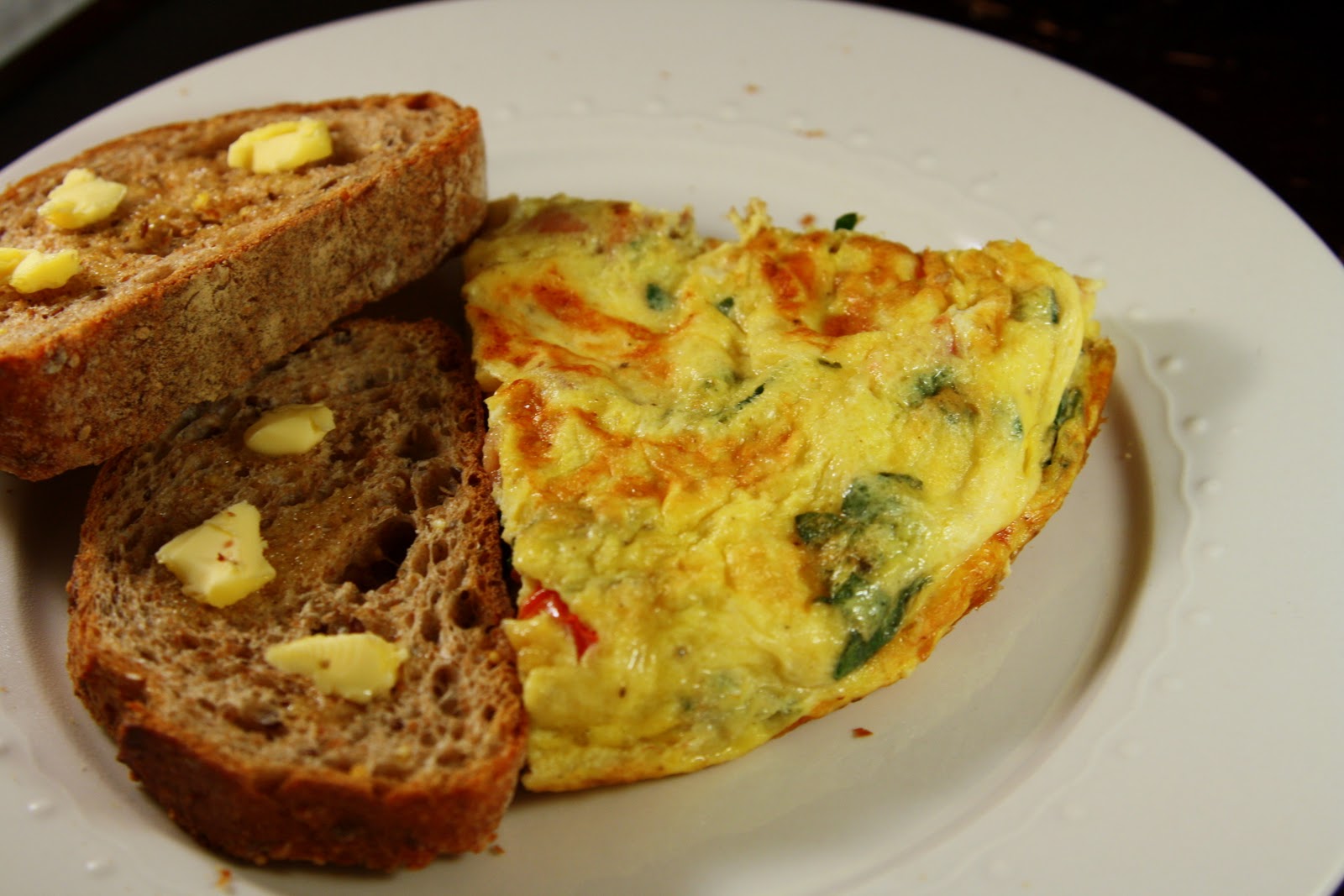
Prosciutto-Mozzarella Frittata


Prosciutto, mozzarella, basil, and tomatoes go well together in almost anything, whether it be a pizza, a salad, or a panini.  Frittatas happen to be my favorite vehicle for playing the game of "let me throw a bunch of ingredients together and see what happens," so when I spotted this recipe from Food and Wine for a frittata containing the Italian quartet of ingredients, I couldn't resist.  As expected, they worked flawlessly together even when mixed together with lots of eggs, producing a very filling and satisfying brunch dish.

As a note, I make all of my frittatas using Calphalon's frittata pan, a two skillet set that allows you to flip the frittata without creating a mess.  Given my tendency to be a klutz in the kitchen, the frittata pan has saved me many hours of wiping eggs from my stove and walls.  I highly recommend it.


Prosciutto-Mozzarella Frittata
Adapted from Food and Wine
Serves 6

Ingredients:
  • 10 large eggs
  • 1/4 cup milk
  • 2 tbsp Pecorino Romano cheese
  • 2 tbsp chopped basil
  • 3/4 tsp salt
  • 1/2 tsp pepper 
  • 3 tbsp olive oil
  • 2 medium shallots, thinly sliced
  • 1 plum tomato, cored, seeded, and diced
  • 4 slices prosciutto, cut into strips
  • 4 ounces fresh mozzarella, cubed
Directions:
  1. In a large bowl, beat together the eggs, milk, Pecorino Romano cheese, basil, salt, and pepper.
  2. Heat 2 tbsp of the olive oil in the deep half of a frittata pan over medium heat.  Add the shallots and cook until they soften, 2 to 3 minutes.  Add the prosciutto and tomato and cook for a minute.  Use a spatula to spread the tomatoes and prosciutto across the bottom of the pan so that they are well distributed.
  3. Add the egg mixture to the pan.  Use a spatula to push the cooked pieces of egg to the middle of the pan and allow the uncooked eggs to flow to the outer edges.  Cook for 3 minutes.
  4. Poke the mozzarella cheese into the eggs so that the cubes are evenly distributed.  Continue to cook the frittata until it is nearly set, another 5 to 7 minutes.  During the last 2 minutes of cooking, heat the remaining tablespoon of olive oil in the shallow half of the frittata pan set over medium heat.
  5. Place the shallow pan on top of the deep pan and flip the frittata.  Keeping the shallow pan covered with the deeper pan, cook the frittata for 4 minutes. 
  6. Uncover the shallow pan and continue to cook the frittata until it is completely set, approximately 5 minutes.
  7. Use a spatula to slide the frittata onto a plate and cut it into wedges for serving. 

Tuesday, January 11, 2011

Lamb Tongue Confit with Lentils and Gremolata


After posting about my lamb tongue confit last week, the reaction I received ranged from intrigue to disgust.  This post is more for those who were curious as to how I would serve the lamb tongues, although I hope that it just may win over a few of you horrified readers as well.  An under-appreciated (at least when it comes to the culinary world) organ like tongue deserves a similarly under-appreciated accompaniment, so I served it over a humble bowl of lentils.  In order to brighten up both the flavor and the color of this heavy, brown dish, I topped each bowl with a spoonful of gremolata.  The one rule to follow with lamb tongue no matter how you serve it is to disguise it by slicing it thinly.  The meat is delicious—distinctively lamby and not too far off from lamb shank—and has surprisingly appetizing texture, but no one really want to be confronted with a shimmering tongue on a plate.  So whether you tell them about the mystery meat or not, do your guests a favor and slice it thin.  That way, few will complain when you slip them a little tongue. 


Lamb Tongue Confit with Lentils and Gremolata
Serves 4
 

Ingredients:
For the lentils:
  • 2 tbsp olive oil
  • 1 medium yellow onion, finely chopped
  • 1 medium carrot, peeled and finely chopped
  • 1 celery stalk, finely chopped
  • 1 garlic clove, minced
  • salt and pepper
  • 1 tbsp tomato paste
  • 3 sprigs thyme
  • 1 bay leaf
  • 1.5 cups water
  • 1 cup French lentils
For the gremolata:
  • 2 tbsp flat-leaf parsley, finely chopped
  • 1 tsp garlic, minced
  • 1 tsp grated lemon zest
Directions:
  1. To make the lentils, heat the olive oil over medium heat in a medium sauce pan.  Add the onion, carrot, celery, and garlic to the pan and cook, stirring occasionally, until the vegetables are soft and beginning to brown, approximately 10 minutes.  Season the vegetables with salt and pepper as they cook. 
  2. Add the tomato paste, thyme, and bay leaf to the pan.  Stir to coat all of the vegetables with the tomato paste and let the mixture cook for about 2 minutes.
  3. Pour the water into the pan and bring to a boil.
  4. Stir in the lentils and let the mixture return to a boil, then reduce to a gentle simmer. 
  5. Partially cover the pan and cook until the lentils are tender, 30 to 45 minutes.  Taste the lentils for salt and pepper and keep warm over low heat.
  6. As the lentils cook, make the gremolata by combining the parsley, garlic, and lemon zest in a small bowl.
  7. Heat the lamb tongues (a minute or two in the microwave works fine) and slice them thinly.
  8. Serve the lentils in individual bowls, topped with slices of lamb tongue and a spoonful of the gremolata.  

    Sunday, January 9, 2011

    Shrimp Wrapped in Pancetta and Sage


     For my weekday meals, I tend to fall into a monotonous rotation of sauteed chicken breasts and pork chops served with not very imaginative pan sauces.  It's not that I especially love these meals (although I have been known to throw together a darn good pan sauce), it's just that after a long day of work, the last thing I want to do is to struggle with a new recipe, so I stick to the familiar.  I'm always excited when I do go out on a limb and discover a new recipe like this one for shrimp wrapped in pancetta and sage that is simple enough for weeknights.  Thanks to my Manhattan stomping grounds, I do have the luxury of having a market between my office and my apartment that sells both very fresh shrimp and high-quality pancetta, so assuming you can find those two components of the ingredient list, this recipe is as easy as it gets.  It is also quite tasty with the shrimp and crispy pancetta creating somewhat of a high-end hot pocket, perfect for eating on the couch after a harrowing day. 


    Shrimp Wrapped in Pancetta and Sage
    Serves 2 to 3

    Ingredients:
    • 1 lb shrimp, peeled and deveined, tails left on
    • pepper
    • 1 bunch sage
    • 1/4 lb pancetta, thinly sliced
    • 1 tbsp olive oil
    Directions:
    1. Lay the shrimp out on a cutting board.
    2. Season the shrimp with pepper.  There is no need to salt the shrimp as the pancetta is very salty.
    3. Place a sage leaf on top of each shrimp.
    4. Wrap a slice of pancetta around each shrimp.
    5. Heat the olive oil in a large skillet until just before smoking.
    6. Gently place the shrimp in the skillet.  Cook without disturbing for 2 minutes then flip each shrimp using a spatula.  Cook the other side until the shrimp are pink and no longer translucent, another 1 to 2 minutes.  Remove the shrimp from the pan and serve immediately. 

    LinkWithin

    Related Posts with Thumbnails