Showing posts with label spring. Show all posts

Monday, April 25, 2011

Bucatini with Pancetta, Fava Beans, and Tomato Sauce


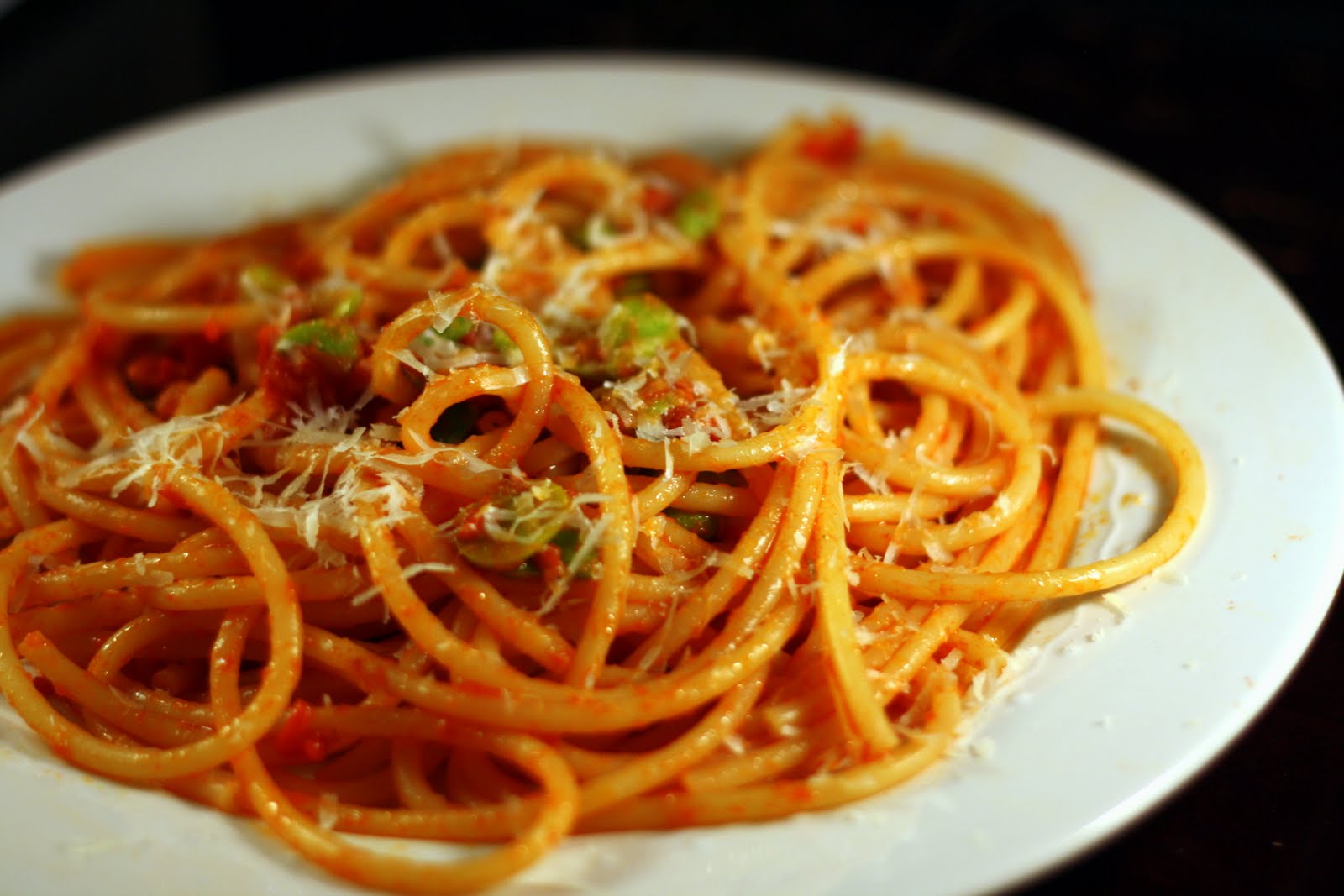
Bucatini is my favorite dried pasta.  Nice and thick—about twice as thick as spaghetti—,it has a wonderful texture that allows a sauce coat each tube perfectly. Although bucatini can be difficult to track down, I was fortunate enough to spot some at Eataly.  The traditional method of serving the pasta i is all'Amatriciana, and I decided to go a similar route with the tomato sauce and pancetta, but it being the beginning of spring after a long, harsh winter, I couldn't resist tossing in some blanched fava beans for good measure.  The beans added wonderful texture and color to the buttery tomato sauce and al dente pasta.


Bucatini with Pancetta, Fava Beans, and Tomato Sauce
Serves 4

Ingredients:
  • 2 lbs fava beans, shelled
  • 2 tbsp olive oil
  • 1/4 lb pancetta, diced 
  • 2 cloves garlic, minced
  • 1 cup simple tomato sauce (I used Marcella Hazan's)
  • 1/4 tsp red pepper flakes
  • 1 lb bucatini
  • grated Pecorino Romano cheese, for serving
Directions:
  1. Bring a large pot of salted water to a boil.  Add the fava beans and let cook for 1 to 2 minutes.  Remove the fava beans with a slotted spoon and put them in a bowl of ice water.  Once cool, peel off the skins of the beans and set aside.  Keep the water at a boil.
  2. Add the bucatini to the boiling water and cook for one minute less than the package suggests. 
  3. While the bucatini boils, heat the olive oil in a saute pan over medium heat.  Add the pancetta and cook until it begins to crisp, about 3 minutes.  Add the garlic and red pepper flakes and let it cook until it is fragrant, about one minute.  Add the tomato sauce to the pan and bring to a simmer.  Stir in the fava beans and taste for seasoning. 
  4. Drain the pasta and stir it into the simmering sauce.  Let the pasta and sauce cook for another minute, stirring to ensure that the pasta strands are coated by the sauce.
  5. Serve the pasta in bowls, topped with grated Pecorino Romano cheese.  
Tuesday, April 12, 2011

Scallops with Fava Beans, Dandelion Greens, Ramps, and Pancetta


 This dish hardly requires a recipe, as it consists of little more than the ingredients listed in the title.  That's what I love about spring produce; it is so delicious on its own that gussying it up with any other ingredients usually does more harm than good.  In this case, I've paired seared jumbo sea scallops with blanched fava beans and dandelion greens, ramps, and crispy pancetta that I have sauteed in a bit of olive oil.  A drizzle of sherry vinegar, a few cracks of salt and pepper, and you have spring on a plate.

Scallops with Fava Beans, Dandelion Greens, Ramps, and Pancetta
Serves 2

Ingredients:
  • 1 lb. fava beans, shelled
  • 2 tbsp
  • 1/4 lb. piece of pancetta, diced
  • 1 bunch of ramps, cleaned, trimmed and cut into 1/4-inch pieces
  • 1 bunch of dandelion greens, cleaned and trimmed
  • 8 large sea scallops
  • salt
  • pepper
  • 1 tbsp butter
  • Sherry vinegar
Directions:
  1. Bring a large pot of salted water to a boil.  Add the shelled fava beans to the water and boil for 2 minutes.  Immediately drain the favas and add them to a bowl of ice water to cool.  Once cooled, peel each fava and place the beans in a bowl.
  2. Heat a tablespoon of olive oil in a large skillet over medium heat.  Add the pancetta and cook, stirring occasionally, until the fat renders and the pancetta begins to crisp.  Add the ramps and cook until some of the pieces begin to brown.  Add the dandelion greens and cook until they begin to wilt.  Season with salt and pepper and drizzle a bit of Sherry vinegar over the greens. 
  3. Meanwhile, as the dandelion pancetta cooks, prepare the scallops.  Pat them dry with a paper towel and season them with salt and pepper.  Heat a tablespoon each of olive oil and butter in a large skillet over high heat.  Add the scallops and cook, undisturbed, until they are well-browned on one side, about 2 to 3 minutes.  Flip the scallops and cook on the other side until it is well-browned, another 2 to 3 minutes.  Set the scallops aside on a plate.
  4. To plate the dish, divide the ramps and dandelion greens among two plates.  Quickly heat the fava beans in one of the skillets just until they are hot and surround the greens with the beans.  Top the greens with the scallops.  Serve immediately.

Sunday, May 9, 2010

Shake Shack's Ramp Dog


I don't count myself among those New Yorkers who are willing to stand in line all afternoon for Shake Shack, but finding myself on the Upper West Side this past Saturday, I could not resist braving the long line outside the restaurant to try the Ramp Dog.  Available for one day only, this hot dog was topped with griddled ramps and applewood smoked bacon butter.  Washed down with a malted chocolate shake, it was worth the wait in line.  Enough said?

Wednesday, April 28, 2010

Springtime "Carbonara" with Ramps and Asparagus


Spaghetti carbonara is one of those classic pasta recipes that you just don’t mess with. Pasta, eggs, Parmesan cheese, guanciale (or pancetta), salt and pepper: those are the only ingredients that should ever go into a carbonara. Don’t add parsley, don’t add peas, and please, please, please don’t add cream. So accept my sincere apologies for calling this dish a carbonara. I really wanted to avoid doing so; it contains heavy cream and smoked bacon—not to mention asparagus and ramps—but that’s what Andrew Carmellini calls it in Urban Italian, from which this recipe is liberally adapted (I substituted bacon for the speck that Carmellini calls for and asparagus for his sugar snap peas and English peas). I’m going to let Mr. Carmellini get away with calling it a carbonara because it is an excellent recipe; with a creamy sauce that clings to each strand of pasta and crispy pieces of cured beat, it has many of the characteristics that I love about carbonara, while the spring vegetables give the dish a more seasonal touch. Regardless of what you want to call it, it will please any carbonara lover out there.

Springtime “Carbonara” with Asparagus and Ramps
Serves 2

Ingredients:
  • ½ cup heavy cream
  • 1 egg
  • 1 handful of asparagus, cleaned, trimmed, and cut into 1-inch pieces
  • ½ lb. spaghetti
  • 4 slices thick-cut bacon, chopped into ½-inch pieces
  • 1 bunch of ramps, cleaned, roots removed, and cut into thirds
  • ½ cup grated Pecorino Romano cheese, plus more for serving
  • black pepper, freshly ground
  • salt, to taste
Directions:
  1. Beat the cream and the egg together in a small bowl until they are well blended. Set aside.
  2. Bring a large pot of salted water to a boil. While waiting for the asparagus to boil, fill a medium bowl with ice water. Add the asparagus to the boiling water and cook until the asparagus turns bright green, 1 to 2 minutes, then use a slotted spoon to immediately plunge the asparagus in the ice water so that it stops cooking.
  3. Add the pasta to the boiling water and cook for one minute less than the package directions indicate. Meanwhile, continue with the rest of the recipe.
  4. Heat a deep-sided skillet or sauté pan over medium-high eat. Add the bacon to the pan and cook, stirring frequently, until the bacon begins to crisp, about 3 minutes.
  5. Add the ramps to the pan and continue to cook until the leaves are wilted and the bulbs begin to brown. Reduce the heat to low, and wait for the pasta to finish cooking, stirring the ramps periodically.
  6. Once the pasta is al dente, drain it, reserving a ½ cup of the cooking water.
  7. Add the asparagus and the reserved pasta water to the skillet. Stir in the pasta, then the cream and egg mixture. There should be just enough liquid in the skillet to coat the pasta, and the sauce should not be watery. If necessary, increase the heat and reduce the sauce to the desired consistency.
  8. Remove the skillet from the heat. Stir in the cheese and a generous amount of ground pepper. Taste for salt. Serve the pasta immediately, with a small amount of Pecorino Romano cheese grated over the top.  

Tuesday, April 27, 2010

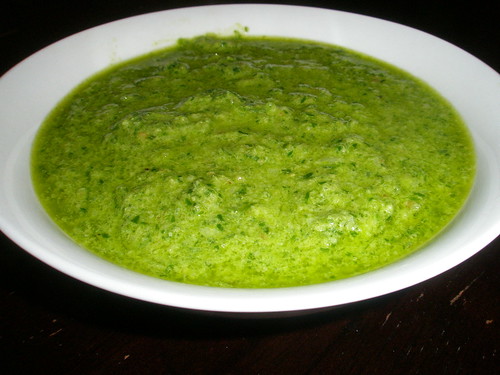
Ramp Pesto with Almonds


Ever since my week long bout with pine mouth, I have been hesitant about eating pine nuts. But being that we are in the midst of ramp season, I just had to make a batch of ramp pesto, one of my favorite preparations for the spring vegetable.  While I nearly took the plunge and used the traditional, innocuous-looking but potentially taste-bud-killing pine nuts, in the end I took the safe route and used almonds, my go-to nut when I need to add some crunch to a dish.  I served the pesto alongside roast chicken and sauteed asparagus and Shiitake mushrooms.  The almonds worked perfectly, adding just the right amount of texture to the pungent ramp pesto.  More importantly, I could still taste my dessert. 

Ramp Pesto

Ingredients:
  • 1 bunch of ramp leaves with two ramp bulbs, roots removed 
  • 1/8 cup olive oil
  • 2 tbsp almonds, toasted
  • 1/4 cup grated pecorino Romano cheese
  • 1/8 cup olive oil
  • salt, to taste
Directions:

In the bowl of a food processor, combine the ramp leaves and bulbs.  Run the food processor and slowly pour in the oil with the motor running.  Continue to process the ramp mixture until it has formed into a smooth paste.  Add the almonds and cheese and pulse until the pesto is well blended (the pesto should not be chunky, but should have some texture from the nuts).  Taste for salt and serve immediately or refrigerate for several days.

Friday, June 12, 2009

The Greenmarket Challenge: Day 5

Rather than supplementing my Greenmarket purchases with purchases from the supermarket as I usually do, I bough all of my purchases from the Greenmarket this week. I set myself a budget of $110, which is only slightly more than what I normally spend for two weeks of groceries. Keep in mind that this budget will cover my breakfasts, lunches, and dinner for the next 12 days; that's $11 a day, a fair budget considering my average lunch in midtown Manhattan is $8. I have allowed myself some leg room to use ingredients such as grains, sauces, and garlic that I already had on hand, but other than that necessary allowance, my entire diet for the week will consist of local foods. Follow along with me as I document local my meals over the next twelve days of my Greenmarket Challenge.

Day 5

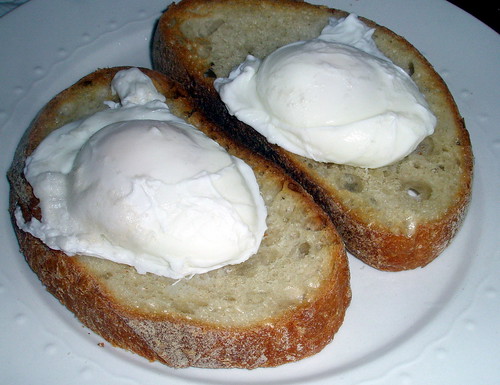
Breakfast: Poached Knoll Crest eggs over whole wheat toast

Lunch: Rotini salad with sugar snap peas and spring garlic pesto (recipe below)

Dinner: Leftover Grazin' Angus Acres roast chicken with roasted asparagus


Spring Garlic Pesto
Adapted from United Taste with Richard Ruben

Ingredients:
  • 4 scallions
  • 3 spring garlic
  • 2 tbsp walnuts, toasted
  • 1 tsp salt
  • Ground black pepper, to taste
  • 3/4 cup oil

Directions:
  1. Coarsely chop scallions and garlic and place into bowl of food processor.
  2. Add walnuts, salt, and pepper and begin to process. Drizzle in oil and process until smooth. If necessary, add more oil to reach desired consistency. Taste for salt and pepper and serve.


Monday, June 1, 2009

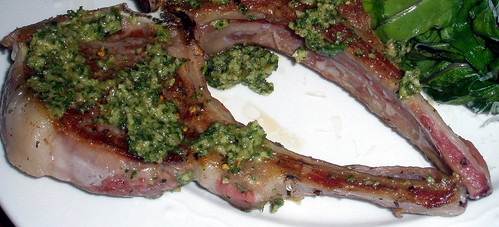
Lamb Chops with Mint Pesto

Mint is a perfect accompaniment to lamb. The lemon juice in this mint pesto adds a sour note that brightens up the the sauce, making it a great dish for spring.

Lamb Chops with Mint Pesto

Serves 4

Ingredients:
  • 2 cups mint leaves, loosely packed
  • 2 tbsp. lemon juice
  • 1/4 cup toasted walnuts
  • 1/4 cup
  • 1 small garlic clove
  • Salt and pepper
  • 2 tbsp. grape seed oil
  • 8 lamb rib chops
Directions:
  1. Combine mint, lemon juice, walnuts, 1/4 cup oil, and garlic in the bowl of a food processor. Pulse until well blended. Add salt and pepper to taste and set aside.
  2. Dry lamb chops with paper towels and season on both sides with salt and pepper.
  3. Heat 2 tbsp. grape seed oil over medium-high heat in a large skillet.
  4. Add lamb chops to skillet and cook, 2 minutes per side for medium-rare.
  5. Let lamb chops rest for a few minutes. Serve with mint pesto.

Thursday, May 14, 2009

Ramps, Mushrooms, and Cream over Polenta

I'm still on what will surely be a short-lived vegetarian kick. However, the idea for this dish came more so from a necessity for a quick meal with minimal cleanup than a desire to make a meatless meal. The dish won't blow you away, but it does the trick when you want to make a nice spring meal with minimal effort.

Ramps, Mushrooms, and Cream over Polenta
Serves 2

Ingredients:
  • 1 tbsp. butter
  • 1 tbsp. olive oil
  • 10 oz. button mushrooms, thinly sliced
  • 1 bunch ramps, cleaned and trimmed, with bulbs separated from leaves
  • 1/4 cup (or more) heavy cream
  • Salt and pepper, to taste
  • Parmesan cheese, for serving
Directions:
  1. Heat olive oil and butter in a skillet over medium heat until butter is melted.
  2. Add mushrooms and ramp bulbs. Season with salt and pepper. Cook, stirring occasionally until mushrooms have given off their liquid and liquid has reduced, about 8 minutes. By this time, mushrooms and ramp bulbs should be slightly browned.
  3. Add two big splashes of cream and bring to boil.
  4. Add ramp leaves and stir until leaves have wilted, about 1 minute.
  5. Taste for salt and pepper. Serve over polenta with parmesan cheese.

Tuesday, May 12, 2009

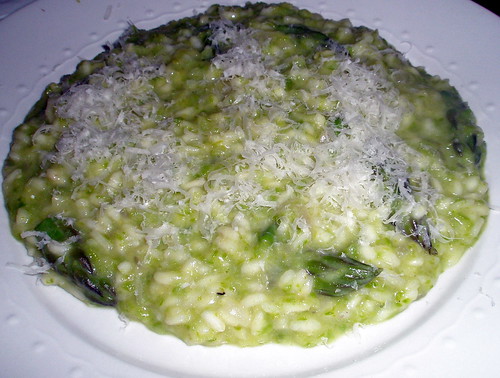
Asparagus Risotto

Risotto is one of those dishes that I have always been wanting to add to my repertoire. It's known to be one of the more labor-intensive dishes, requiring constant stirring and fairly little room for error. And as with any labor-intensive, finicky recipe, it is a dish that is a rite of passage for all chefs; once you have successfully cooked risotto, you reach a new culinary skill level.

My first attempt at risotto was a disaster, resulting in crunchy, flavorless rice. The other night, determined both to use up the asparagus I purchased from the Greenmarket and to give risotto one more try, I came across this recipe for asparagus risotto from The Amateur Gourmet to find out if I was finally ready to take my cooking to the next level. Fortunately for my pride as a cook, my second attempt at risotto was an overwhelming success, no doubt thanks to the terrific step-by-step instructions from The Amateur Gourmet.

The asparagus stalk puree is the key to this recipe, ensuring that every bite is filled with the great flavors of the season's first asparagus and that the dish has a wonderful green hue. The dish is the perfect celebration of spring and left me with little doubt that I could easily be a vegetarian if spring lasted all year round. Despite the small number of ingredients, this dish was a struggle for me, with the rice taking twice as long to become tender and creamy as the recipe indicated; after stirring constantly for nearly 40 minutes in my hot kitchen, I had worked up quite a sweat. However, the end result was well worth the effort.

Friday, May 8, 2009

Pasta with Ramps, Breadcrumbs, and Pecorino


The spring air makes me forget about protein-centric meals and crave simple meals where seasonal vegetables take the lead role. For this dish, I used fresh whole wheat fettuccine from Knoll Crest Farm, but a thinner pasta like fresh linguine would work best in letting the flavor of the ramps come through. Don't be shy about browning the ramp bulbs; they will not take on the bitter taste of burnt garlic, but rather will become soft and sweet. I was generous with the pecorino and found it to add just enough salt to the dish, but feel free to add a pinch of salt while cooking the ramps.

Pasta with Ramps, Breadcrumbs, and Pecorino
Serves 2-3

Ingredients:
  • 12 oz. fresh linguine
  • 4 tbsp. olive oilBold
  • 1 bunch of ramps, cleaned, leaves separated from bulbs and leaves julienned
  • 1/2 cup fresh breadcrumbs, toasted
  • Gated pecorino romano cheese, for serving

Directions:
  1. Cook pasta in salted boiling water until al dente.
  2. Meanwhile, heat oil in a skillet over medium-high heat until almost smoking. Add ramp bulbs and cook, stirring occasionally, until very brown and blistered, about 5 min.
  3. Add ramp leaves and breadcrumbs and stir until wilted about 1 min.
  4. Drain pasta and toss with ramp mixture. Serve pasta on plates topped with grated cheese.

Wednesday, May 6, 2009

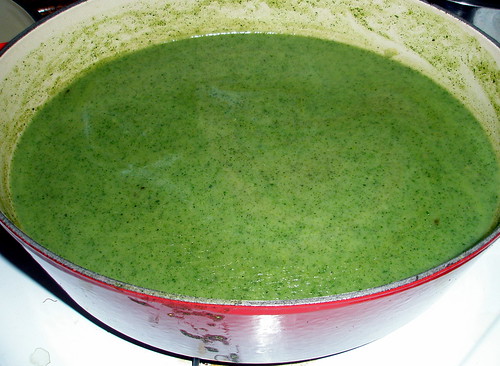
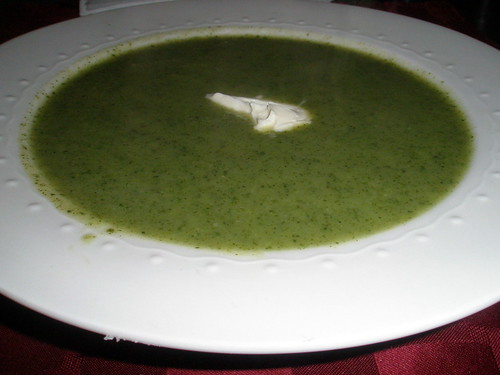
Stinging Nettle Soup

This soup is inspired by a recipe from Matt Tebbutt's Cooks Country. Yes, this cookbook was the source of the Pheasant Phlop. Fortunately, this recipe did not end in disaster, and made good use of an ingredient I had never cooked with before in stinging nettles. Be sure to handle the nettles with gloves prior to blanching them in water to avoid a stingy situation.

Stinging Nettle Soup

Ingredients:
  • 1/2 stick butter
  • 2 yellow onions, diced
  • 2 leeks, diced
  • 2 celery stalks, diced
  • 4 garlic cloves, smashed
  • 1 thyme sprig
  • 2 bay leaves
  • salt and pepper, to taste
  • 4 large red potatoes, diced
  • 6 cups chicken stock
  • 1 bunch stinging nettles, leaves only (handle with gloves), blanched in boiling water for one minute and cooled in ice water (this will remove the stingers, making the nettles safe to handle)
  • 2 loosely packed cups spinach leaves
  • creme fraiche, for serving
Directions:
  1. Melt butter in soup pot over medium-low heat.
  2. Once butter has melted, add onions, leeks, celery, garlic, bay leaves, and thyme. Saute until vegetables are soft, about 10 minutes. Season with salt and pepper.
  3. Add potatoes and stock. Let simmer until potatoes are soft, about 30 minutes.
  4. Add spinach and nettles, and let wilt for approximately one minute.
  5. Puree soup with a stick blender and taste for salt and pepper.
  6. Serve soup in bowls with a dollop of creme fraiche.

Monday, May 4, 2009

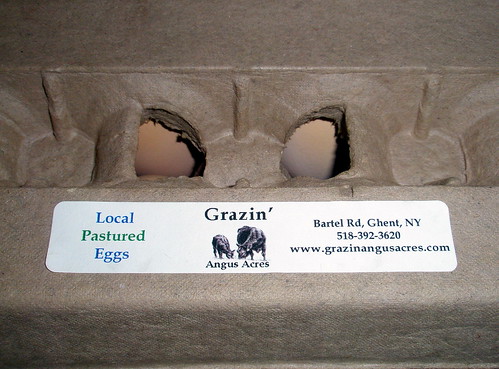
Best Eggs of the Greenmarket: Grazin' Angus Acres

I have tried nearly all of the eggs sold at the Union Square Greenmarket, and can now proclaim those from Grazin' Angus Acres to be the best. At $8 per dozen, these eggs are by far the most expensive eggs sold at the Greenmarket, but I assure you they are worth every penny as they far surpass any other egg sold.
Sold only during the spring months (yes, eggs do have a season), when the hens are freely roaming the pasture, these eggs have the most deeply orange yolk I have ever seen; they are the richest and creamiest eggs I have ever tasted. The yolk has a slightly grassy flavor, a reminder of the pasture on which they were laid. The white, an afterthought in most eggs, is creamy in these. With eggs this fresh and rich, make sure to cook them minimally, leaving the yolk runny. In my opinion, poached and served over toast is the way to go.

Saturday, May 2, 2009

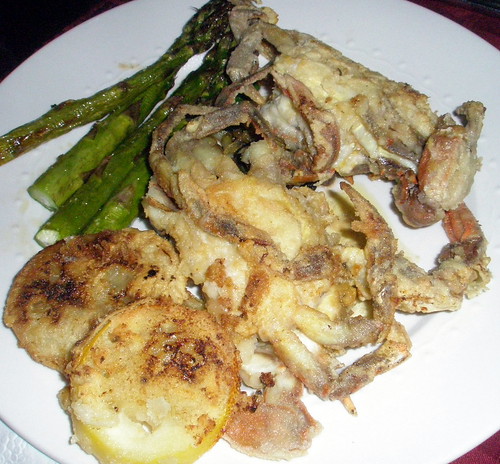
Fried Soft-Shell Crabs with Ramps and Asparagus

I was inspired to make this dinner after reading this interview of Michael Anthony, chef of Gramercy Tavern. He says that his last meal would consist of soft shell crabs and ramps. I decided to up Chef Anthony a notch by including some roasted asparagus on the plate. You can't get much more seasonal than this dish, and I was somewhat annoyed by it's success, knowing that it would likely be next year before I have a chance to make it again.

This marked the first time I have ever cooked soft-shell crabs, and I was impressed with how easy they were to make and how well they turned out. Don't be intimidated by the thought of throwing live crabs into hot oil. My technique was from David Pasternack's The Young Man & The Sea. While heating up a large skillet filled with about a half cup of olive oil, I mixed together Wondra flour, corn starch and salt and pepper, and set aside another small bowl filled with milk. I dipped the crabs in the milk, then in the flour mixture, shaking off any excess. The crabs then went into the skillet, about 3 minutes per side. After a sprinkling of sea salt, they were ready to eat.

Thursday, April 23, 2009

Ricotta Gnocchi with Ramp Pesto

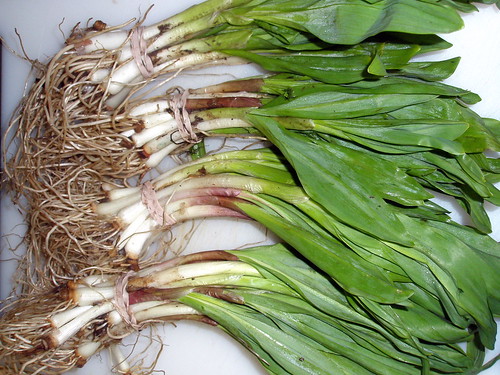
This could hardly be called a New York-based food blog I didn't feature at least one recipe with ramps. Ramps are wild leeks that have a very short growing season and are all the rage in the East Coast culinary world at the beginning of spring. The bulbs and stems are as pungent and garlic, while the leaves have a grassy flavor. This combination makes ramps versatile ingredients, able to brighten dishes ranging from pasta to eggs.


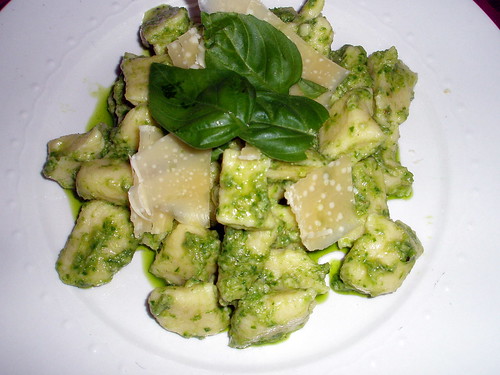
I used my first ramps of the season to make a ramp pesto, which I served with ricotta gnocchi I had made from the A16: Food+Wine cookbook. This was my first ever attempt at pasta, and I was pleased with the result. While not nearly as light and fluffy as great gnocchi can be (mostly due to my lack of a stand mixer and the addition of too much flour), the flavor was very nice. More importantly, the gnocchi held together when I boiled them, making them a success in my book.

Although I cooked the ramp bulbs and stems prior to processing them for the pesto, it was still incredibly pungent and peppery. The flavors overwhelmed the gnocchi, so I would recommend just pairing it with a simple dried pasta such as rigatoni. I would think the pesto would also be great with any roasted or grilled meat. Just be sure to brush your teeth thoroughly after trying this pesto, as your breath will be potent.


Ramp Pesto

Ingredients:
  • 3 to 4 bunches of ramps, washed and thoroughly dried
  • 1 tbsp plus 3/4 to 1 cup of olive oil
  • Salt, to taste
  • 2 tbsp walnuts
  • 1/2 cup parmesan cheese
Directions:
  1. Separate the ramp stems and bulbs from the leaves. Chop the stems and bulbs into small pieces. Set aside and reserve the leaves.
  2. Heat 1 tbsp oil in a small skillet over medium heat. Add the chopped ramp stems and bulbs and cook, stirring occassionally, for about 5 minutes (do not brown).
  3. Add the ramp leaves, bulbs and stems, salt, walnuts, and 1/2 cup of oil to the bowl of a food processor. Process until a paste is formed, then drizzle in the rest of the olive oil while continuing to process the mixture. Continue to add more oil until pesto reaches a desired consistency. Taste for salt.
  4. Fold in the parmesan cheese and serve.

LinkWithin

Related Posts with Thumbnails